Jackie Parry – author


2 Comments

Painting memories – Positive thoughts

I am a messy painter. The fumes bother me and once I have a project on the go, I become manically obsessed to complete it as soon as possible.

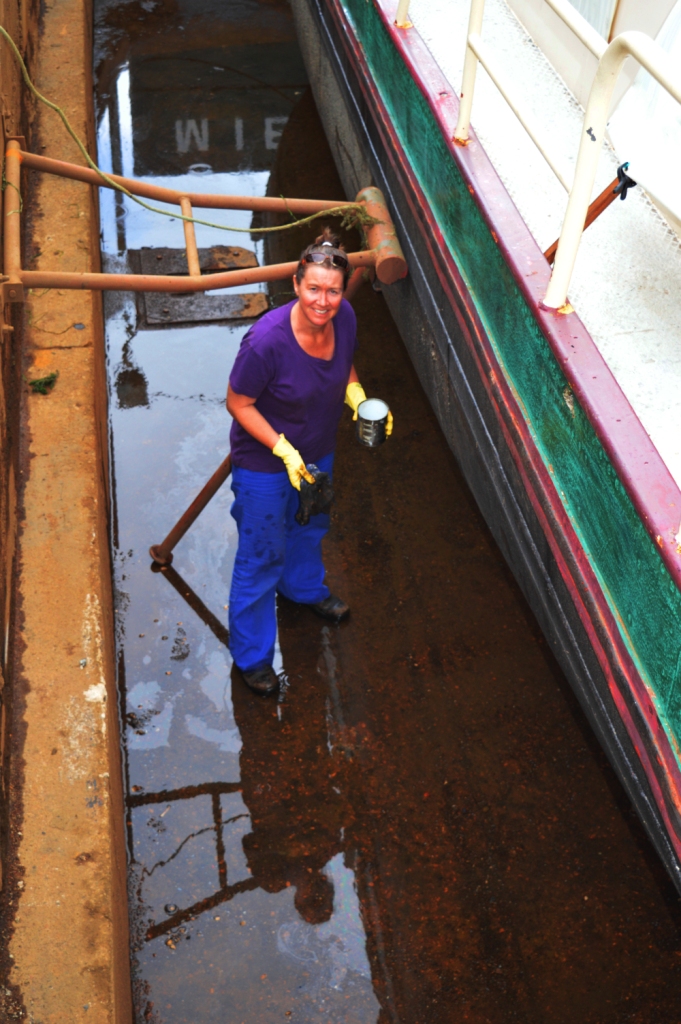
On my 'overalls' which are sucking up the water!

Painting Rouge Corsair when she was in the dry dock

So, after preparing the surface (of the wheelhouse roof – see our ‘rain-catcher’ blog for more details), I had sore knees (I’m not twenty any more, oh okay, I’m not thirty any more either . . . !), I was covered in a fine coating of ‘dust’ and have earned my stiff muscles.

It was time to settle down to paint . . .  the fumes hit me . . . and so did the memories.

I've painted a lot of boats too - Mariah II (our first sailboat)

I’ve painted a lot of boats too – Mariah II (our first sailboat)

I’ve renovated my parents’ house, working with my dad. I’ve renovated a few houses with Noel, our own, and for others. The most interesting was some apartments in Puerto Rico for some friends. The most memorable was my parents’ house, the place I grew up in.

Noel and my dad, (right) - and me blitzed our house in Staffordshire with paint in just a few days. Dad helped us many times over the years!

Noel and my dad, (right) – and me blitzed our house in Staffordshire with paint in just a few days. Dad helped us many times over the years!

My Positives: The paint fumes carried memories of past projects and cherished times. I loved working with my dad, on the house I grew up in. For several weeks my dad and I worked in harmony and I ‘gave something back’, to a house that seemed to look after me and provide me with incredible memories. It was a very special time, for a many different reasons and I’m grateful for those memories.


9 Comments

Which Boat?

Your boat becomes your world, town, village, home, sanctuary. There is no such thing as a perfect boat, and you will always make at the very minimum one or two compromises when you make your purchase.

If you intend to cruise long-term, do not forget to consider the boat’s ability to be your home. There are used boats out there to suit any budget.

Our second boat Pyewacket had plenty of space for 'work' and living.

Our second boat Pyewacket had plenty of space for ‘work’ and living.

Which boat building material is better?

With a plethora of different boat materials, design, layout, length etc., our suggestion for which material to buy is to buy a boat built of material you like, or can handle working with.

They all have their pros and cons:

Timber

Pros: Light, strong, attractive, easy to work

Cons: Rot, dents easily, many parts make the whole unit

Composite – usually molded lightweight timber and epoxy resigns

Pros: Light, strong, low maintenance, no electrolysis

Cons: Not a strong as steel, especially pin-point loads
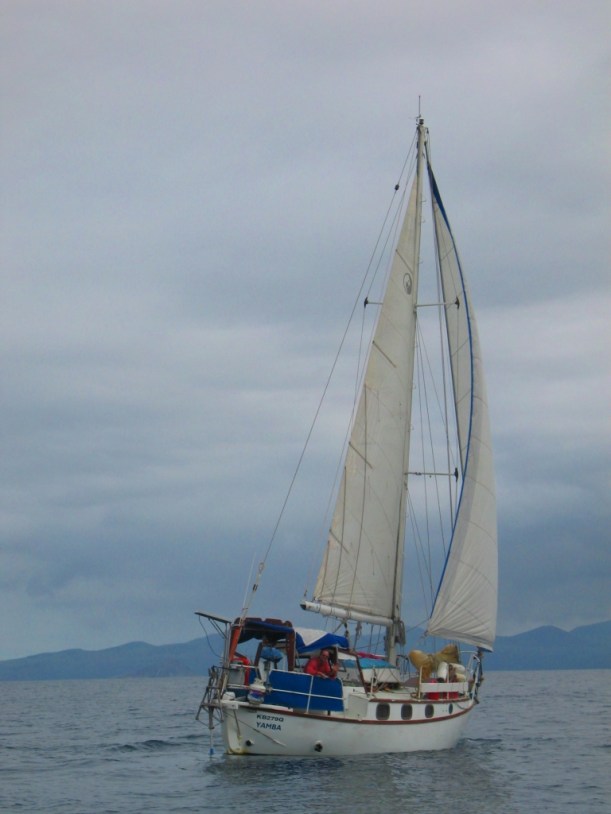
Mariah II, our first boat, a composite build and cutter rigged sloop.

Mariah II, our first boat, a composite build and cutter rigged sloop.

Ferro

Pros: Cheap

Cons: Undetected terminal damage, due to rust, a possibility. Poor resale

Fibreglass

Pros: Strong, light, modular construction

Cons: Osmosis, UV deterioration

Pyewacket II, fibreglass and cutter rigged too.

Pyewacket II, fibreglass and cutter rigged too.

Aluminium

Pros: Best strength to weight ratio of the commonly used metals, easier to work with than steel

Cons: Electrolysis: constant monitoring of electrolysis is required (e.g. earth leakages in power circuit). Galvanic Corrosion: don’t drop a coin or sinker in the bilge, as it will corrode the aluminium

Steel

Pros: Strong, easy to repair

Cons: Maintenance, rust, heavy

When looking at boats you obviously see what needs doing, but start asking pertinent questions or thinking along the lines of what you don’t see. There are always hidden surprises. If you see a lot of work, that will only be a part of what actually is required.

All jobs on the boat take much more time than you think. Give a job a time, double it, then treble it and then you are nearly half way to estimating the time the job will take.

Size

Previously we talked about the rough calculation (in our opinion) of a size of a boat being 10 feet per decade of your age (see previous article here).

In our twenties, it always made us feel better that we were the smallest at all the anchorages, we thought bigger boats were too big to handle for two, more expensive etc. In our middle age, several years later we leapt up to 51’ (by accident really). Pyewacket handled better than Mariah (our first boat of 33 ft) under sail and motor, she was far easier to dock. As for reefing there was no difference, it was just as easy on Pyewacket as it was on Mariah . . . in fact in some cases it was slightly less of struggle (in big seas). Pyewacket had a kinder motion and bum bars to lean on (next to the mast).

Costs

We’ve already written a fair bit about the costs (see link to article above). However don’t forget, the marina fees will be more for a larger boat, (and hauling out). But with hard work and constant maintenance on both our boats, we noticed that Pyewacket (51 ft) was not significantly more expensive than Mariah (33 ft) …  all in all an eye opener for us.

Pyewacket II - 51' and not significantly dearer!

Pyewacket II – 51′ and not significantly more expensive, however, a fair bit deeper at 2 metres (compared with Mariah’s 1.5 metres)

Make some savings with a bigger boat

We actually made some savings, having a larger boat:

Pyewacket sailed so much better to windward so we used far less diesel than we did on Mariah*.

We had far more storage for storing long-term foods and spare parts. We carried incredible amounts of water, so it didn’t matter that we didn’t have a water-maker or that we didn’t see land for months. (We could also collect rain water very easily – more on that another day).

*(I know, I know – it’s a sailboat, why do we run the engine? Well, at times there is no wind (or very little) and swells in the ocean, this can create a horrid motion on board, which is not only uncomfortable but damaging. As the boat rolls, the sails ‘slat’, or ‘bang’ from side to side as there is not enough wind to keep them full. This stress on the sails is very damaging and ultimately could end up costing you more than the diesel you use to counteract the rolling motion. At these times we would run the engine at very low revs, just enough to settle the boat’s motion, protect our sails and have a bit of comfort on board.

Storage

Considerations:

  • where the dinghy is to be stowed
  • the outboards
  • dive gear
  • spares
  • food
  • linen
  • towels
  • toilet rolls
  • sails
  • lines
  • clothes
  • beer
  • books
  • laptops and printers
  • charts
  • fenders
  • sewing machine
  • vacuum
  • cleaning gear
  • bathroom gear
  • shoes
  • dirty laundry…

There is no ‘right’ kind or size of boat. Our preference is on the heavier side. As well as type, design, materials, think ‘layout’ as you are going to be living on this boat for some time. In our opinion a ‘big’ bathroom looks good but is really a waste of space.

Poled out on Mariah.

Poled out on Mariah.

Rig

Different types of rig are linked with different types of boat. For example a schooner and a ketch have different aerodynamic properties, which make them more suitable to certain types of boating. A racing boat will have different aerodynamics than a cruiser. Ensure the rig is fitted according to the design of the boat. Double mast rigs allow different sail plans. Cutter rigging on the foremast is ideal for carrying a storm jib and is strong.

A Schooner has beauty, but is it manageable? Popular choices are sloop and cutter. Both our boats were cutter-rigged sloops which worked for us (furling jib, hanked-on staysail and full battened main).

The missen on a ketch or schooner take up a lot of room, usually reducing cockpit comfort.

Can you cope?

If there are just two of you on board, you are effectively single-handed for at least eight hours a day. What if something happens to your partner? Can you handle the rig? Not just when there is a 15-knot breeze, your partner may be incapacitated in a storm, can you handle everything then?

Keels

Full keel:

  • less manoeuvrability in port (wider turning circle, when applying astern propulsion it could go anywhere – probably into the wind)
  • more stable
  • take grounding better
  • can help protect prop from debris
  • don’t point very well
  • less likely, in our opinion, to broach
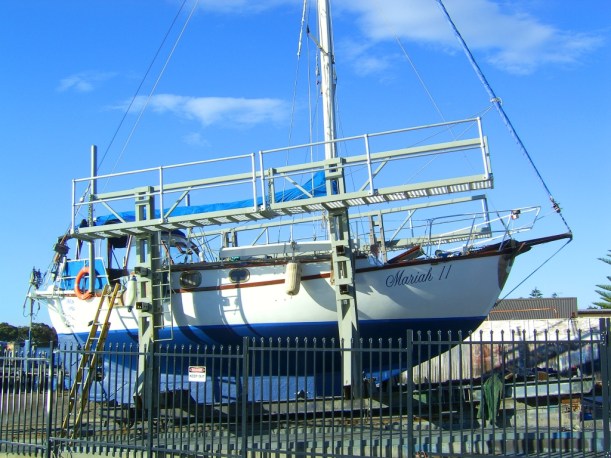
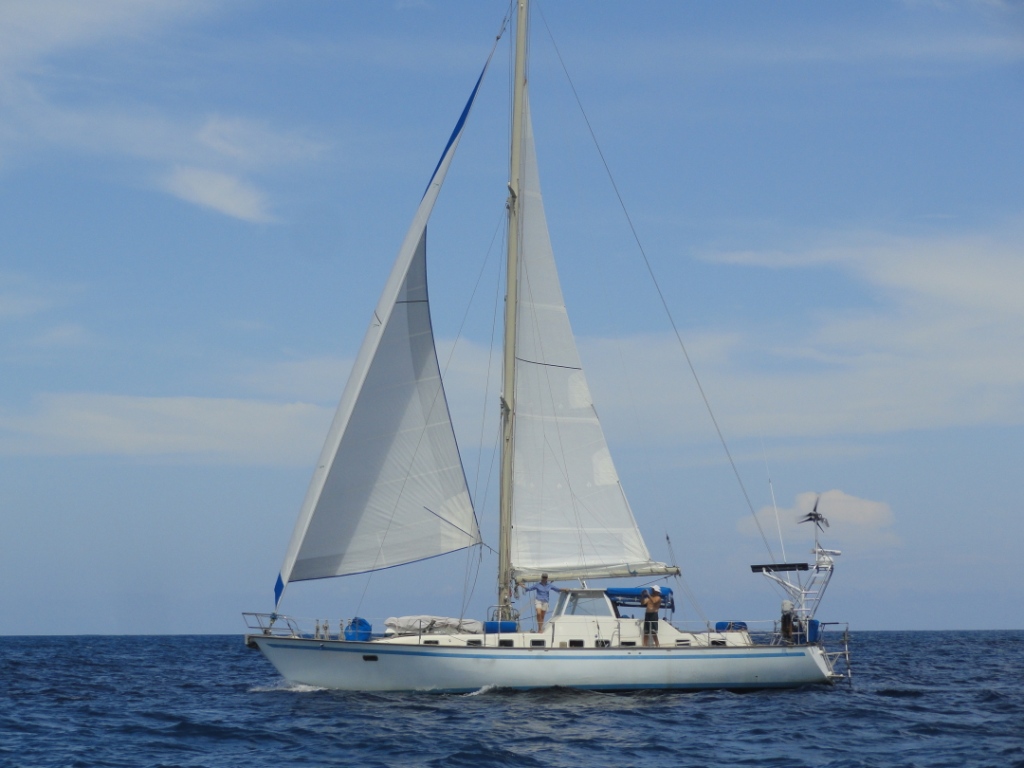
A good depth, 1.5 metres on Mariah. This meant we could get into fantastic ports such as Aitutaki.

A good depth, 1.5 metres on Mariah. This meant we could get into fantastic ports such as Aitutaki.

Fin keels:

  • more on performance boats
  • more efficient
  • point better
  • less structurally sound
  • grounding could result in major damage

We’ve listed two extremes here, of course there are many choices ‘between’ these. Study, research and figure out what you want to do. If you just want to do bay sailing on the weekend you would want a fin keel. If you are serious about blue water cruising, think full keel, or something close to it.

For cruising try to avoid ‘a fat-arsed’ boat, they are tempting for storage but enhance the vessel’s desire to broach.
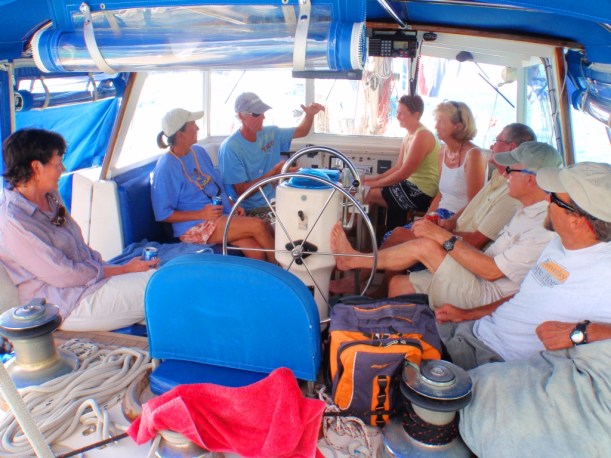
Pyewacket's great cockpit 'stored' many people!

Pyewacket’s great cockpit ‘stored’ many people!

Then there’s depth . . . the deeper the boat the more restricted you are into some ports/anchorages… but that is not a top-list item for us – safety & comfort come first.

With some of the technical aspects tackled here – don’t forget the boat will become your home. The considerations are endless. Our book Cruiser’s AA will tell you much more.
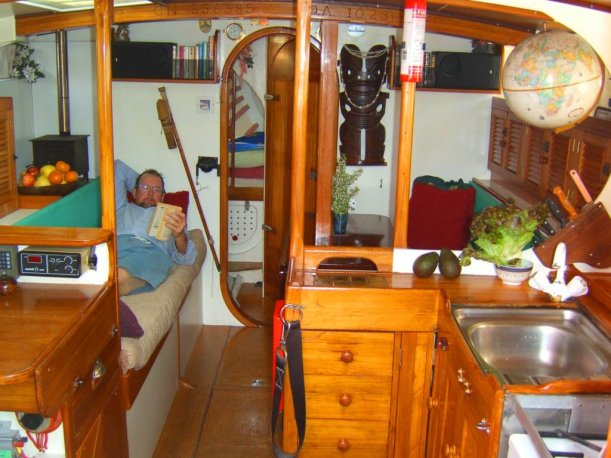
Mariah was small (33ft) but very roomy and comfortable.
Mariah was small (33ft) but very roomy and comfortable.

8 Comments

A Nomination!

Viki Moore, sailing friend and author of the blog Astrolabe Sailing has kindly nominated my blog for a Leibster Award!

 (The Leibster Award – A blog is “nominated” for this “award” by other bloggers. It is a bit like a chain letter, except that the idea is to allow a blogger to introduce or recognize a fellow blogger’s work. So, being nominated is a bit of an honour…or at least an indication that someone else likes your work.)

I know the phrase chain-letter, can be off putting, however, it is fabulous that people are reading my blog and wanting to know more… so I’ll keep this brief – this is just a bit about us and what we’re up to!…if you want to know more…follow my blog.

1. Introduce us to your crew – who are they and what roles do they play in your operation?

There’s just Noel and I on board. We are both captain and crew – we try not argue too much about who is what on which day!

2. What sort of boat do you have and would you recommend it for other adventurers hoping to live aboard? What do you like the least about your choice?

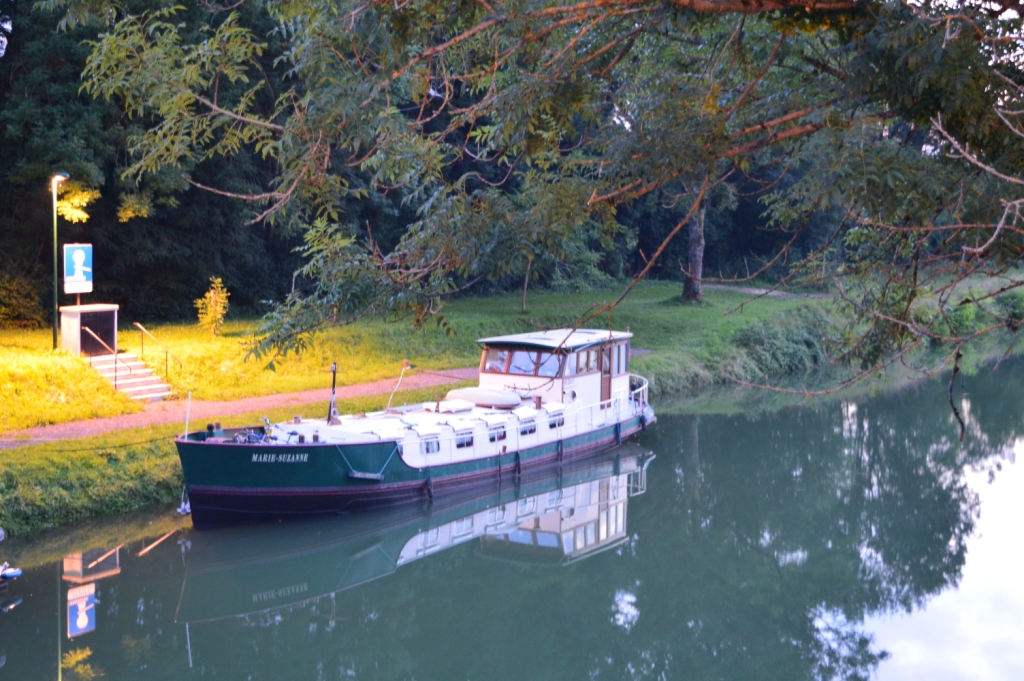
Our current home

Our current home

Well, we are now on a Dutch barge, (we have previously lived on two different sailboats; for almost nine years on the first and a little over two years on the second). Rouge Corsair is a Luxe Motor, built 1920, and a rather neat boat to live on. I’d certainly recommend this type of boat for the canals. Rouge Corsair was a bunker boat, which means she has a fine bow and is easy to handle. We don’t have a bow-thruster but rely on the incredibly useful prop walk (large prop and slow speed) to manoeuvre her bow and stern. She’s 18.5 metres long, 3.96 wide, draft is 1m and air-draft (important in the canals) is 2.95m.

What do I like least? Hmmmm, tricky. At the moment just the mountains of dark brown timber (stained) below decks. My paint-brush will be doing the rounds this winter!

3. What are your sailing plans, if you have any, for the future?

We are cruising in Europe for a few years – probably. Then…maybe…another sailboat…we shall see.
4. How do you support your lifestyle while sailing and cruising?
Writing and photography, my next book Of Foreign Build, will be out very shortly. Also, I write for magazines. We are both maritime teachers and when on land (between adventures) we save like mad so we can go off and play again.

I'll write anywhere/anytime!

I’ll write anywhere/anytime!

5. What’s the best experience you’ve had while living aboard?

So many and for so many different reasons: visiting unique countries and meeting different cultures…playing with orang-utans, swimming with sea-lions and whales, having time to watch the world unfold around me at my pace. Changing from a Corporate Girl to a Sea Gypsy Woman and finding out who I am!

We've had some incredible experiences.

We’ve had some incredible experiences.

6. Name the most challenging experience you have had while living aboard and what did you do to overcome it?

A raving storm was not very nice, basically it was survival tactics, drogue out, storms sails hauled and hunker down (running with it). Another time, in an anchorage that was impossible to get out of at night (the channel was not lit) – and being trapped within 60 knots of vortexing wind … we nearly lost the boat that night. (In the Gambiers), next time, with the same weather forecast and possibility of it happening again, I’d get out to sea (if possible) – there are far less things out there to hit!

7. Is living aboard and sailing an alternative way of life for you, an escape from the system, or is it just a temporary adventure?

It is a way of life, until we have to earn money and want to stop for a while. Longest stretch on-land, in-between adventures is two years.

 8. Any big mistakes you have learned from that others may learn from too?

Don’t wait to learn. Enrol in a course, read and research BEFORE you go.

9. What advice would you give to those that may be interested in following in your footsteps and living aboard and/or cruising?

As above and JUST GO! Read our blog, including fortnightly updates on Cruising Clinic for answers to this question – and our book Cruisers’ AA. And, don’t listen to nay-sayers – if someone says, ‘you can’t do that,’ it means you can!

Yes, you can get here!

Yes, you can get here!

10.What motivates you to blog and what tips can you offer fellow bloggers?

It helps me keep track of what we are doing, while keeping everyone up to date! Just write down what you are feeling, experiencing. Let it flow. Also, everyone has a good idea or something to teach others – no matter what stage of cruising life we are at, so it is good to share. AND it is a great reference back. (It also inspires you take some great photography and keep them organised!)

Keeping a blog inspires your creativity side!

Keeping a blog inspires your creative side!

So, that’s us – thanks again Viki for nominating me. I would now like to nominate a few of the other blogs that I follow and enjoy – they are:

Eurmacs

On A Barge in France

Four2Tango

Sailing in my Sarong/Valiam goes sailing around the world

If you see your blog listed above, just follow these simple rules to accept your own Liebster Award:

  • Refer back to the blog that you nominated you
  • Answer questions posed by the nominator (same ones as above)

Nominate other blogs you believe are worthwhile


9 Comments

That’s Boating Life!

We have two dead batteries and details of our PREVIOUSLY smashed wheelhouse and it’s only 8:24 am!

Okay, the wheelhouse is CURRENTLY in one piece, but it WAS smashed – sometime ago. The book, about Lionel (see last post), reveals that our boat has already traversed the Canal du Midi a long time ago… back then, they mis-calculated a bridge measurement and the wheelhouse didn’t make it!

Will the wheelhouse fit under lower bridges?

Will the wheelhouse fit under lower bridges?

My mum has the book with these details and is telling me, much too calmly for my liking, about the bridges.

WHICH, bridge?” (betting it is the Capestang or Marengo)

Did they re-build the wheelhouse lower?”

…and now I wait with baited breath… especially as we have just paid three months rent for our winter mooring in the Canal du Midi (Buzet du Baisse)!

Two batteries are looking rather poorly this morning, we were hoping they would last (the other two didn’t), so it looks like two more new ones are on the cards…sigh.

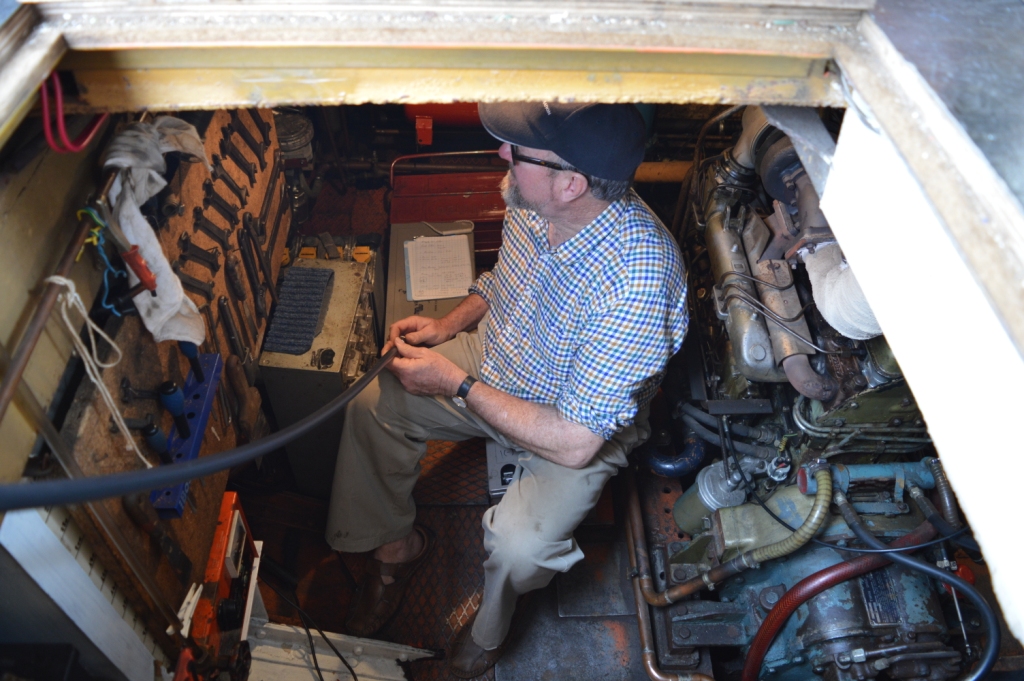
Shall I lock Noel in the engine room?

Shall I lock Noel in the engine room?

That said, it’s raining and our rain-catcher is working a treat! And Noel’s just announced he is going on the internet to seek psychiatric help. Happy days! 🙂

Rain!

Rain!


11 Comments

Our boat is famous – and past, present & future names

‘Your boat is famous!’ The couple said. They were cycling along and skidded to a halt right next to us. ‘Your boat was called Lionel.’

We knew our boat ‘had a past’, we discovered it by finding a poster that was buried in the deepest, darkest cupboards on board. The picture on the poster is our boat and turned out to be a book cover.

The poster found on board.

The poster found on board.

At this point, as we are talking about boat names, I should say that the current name of our boat, Marie Suzanne, will very soon be changed to Rouge Corsair (RC). Yes, we are fully aware it is bad luck to change the name of a boat. However, we already have the champagne to appease the relevant gods and we have planned a neat little name-changing ceremony.

The name Rouge Corsair was the name of a wonderful little horse I owned some years ago – it is in honour of him.

rouge corsair vinyl stickers

Bear with me, this IS all linked!

It turns out that a Canadian couple owned our boat and in 1997 they traversed the canals. Rouge Corsair was called Lionel at that point. They wrote a book about their escapades, Travels with Lionel – A small boat in France, by Hart Massey

We know a few people who have read the book, with differing opinions on the content. Our copy is on order and we are looking forward to finding out a bit more about Rouge Corsair’s history!


13 Comments

Water Catcher – drought inducing – part 4

I’ve probably just secured a drought for France for the next few months, as I have now completed our rain catcher.

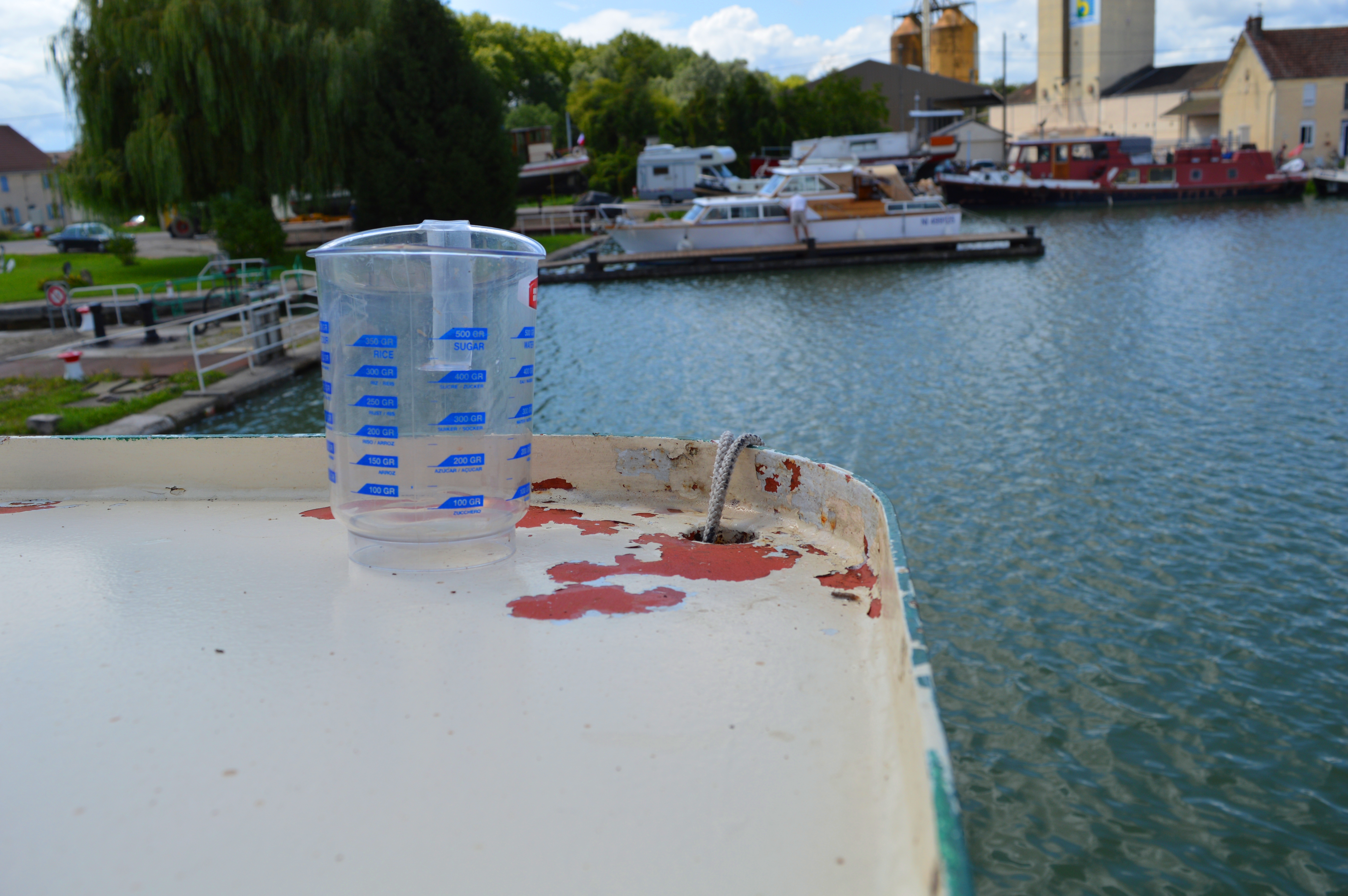
Post down-pipe and water inlet (under lock)

Port down-pipe and water inlet (under lock)

We have two water tanks. The port side inlet/tank is near the down-pipe. The other inlet/tank is near the bow of the boat, so we had to incorporate a hose to fill that one.

I’ll let the photos show how it was done.

Filter

Filter

Showing how it slots in (this part has been glued to the rest now)

Showing how it slots in (this part has been glued to the rest now)

DSC_0102

Port side all done.

Port side all done.

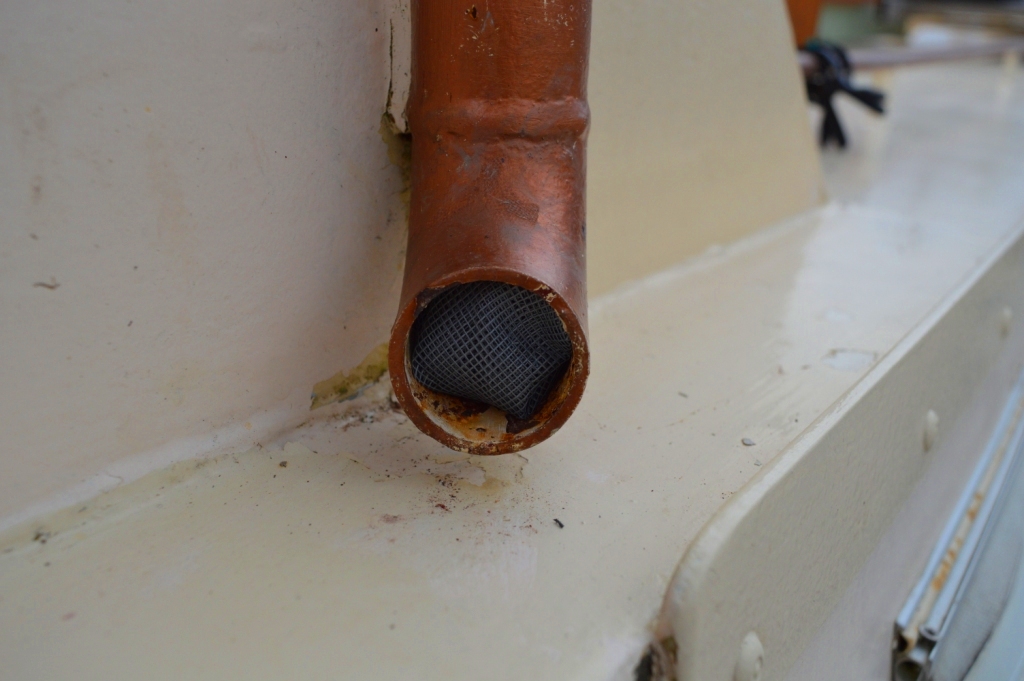
Filter in starboard side.

Filter in starboard side.

Connections in place

Connections in place

A better view - the hose runs forward

A better view – the hose runs forward

Into the second water tank.

Into the second water tank.

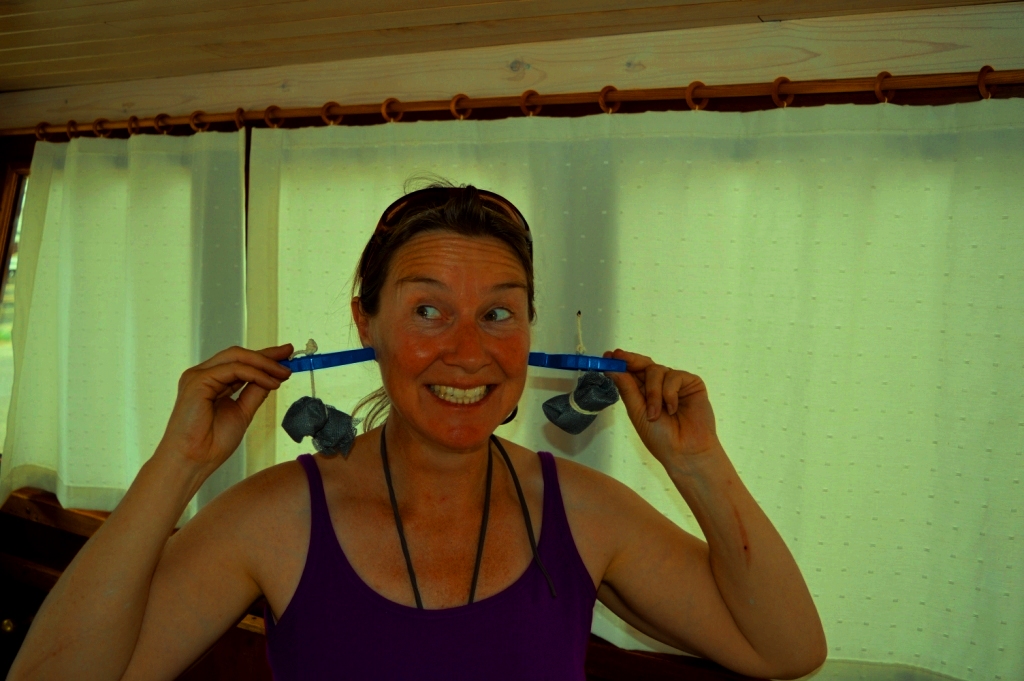
Crazy women with ear-rings - or ARE THEY ear-rings?

Crazy women with ear-rings – or ARE THEY ear-rings?

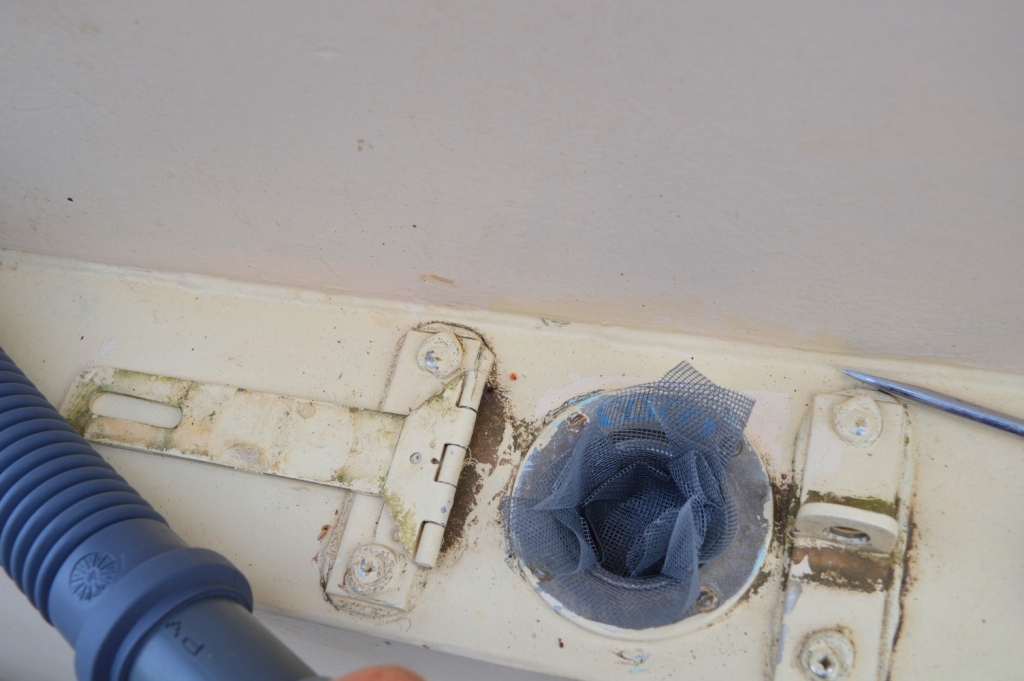
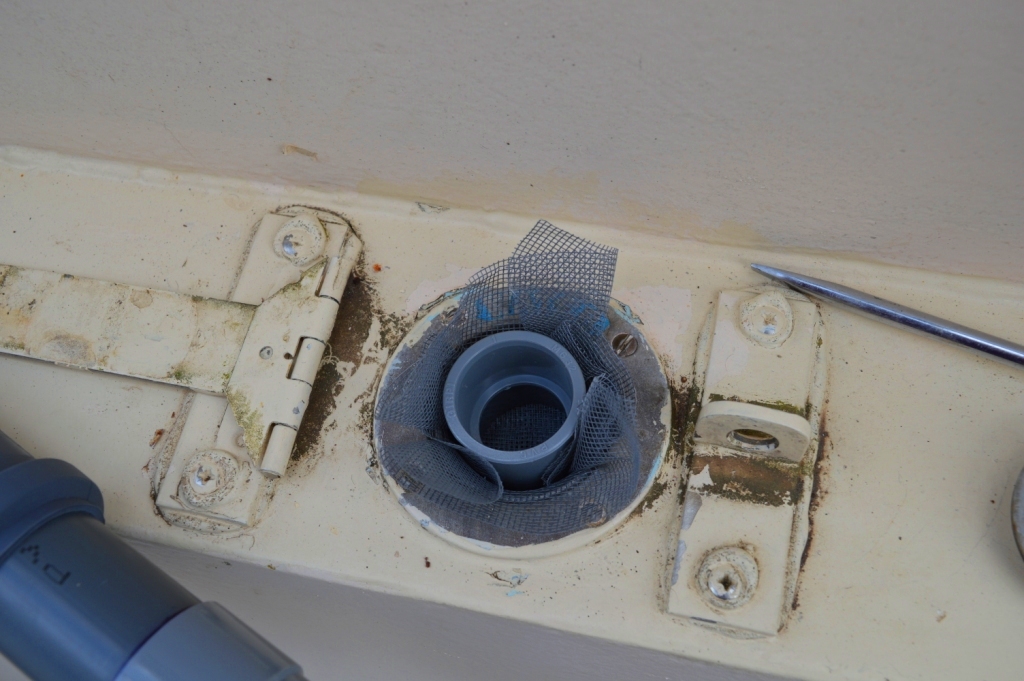
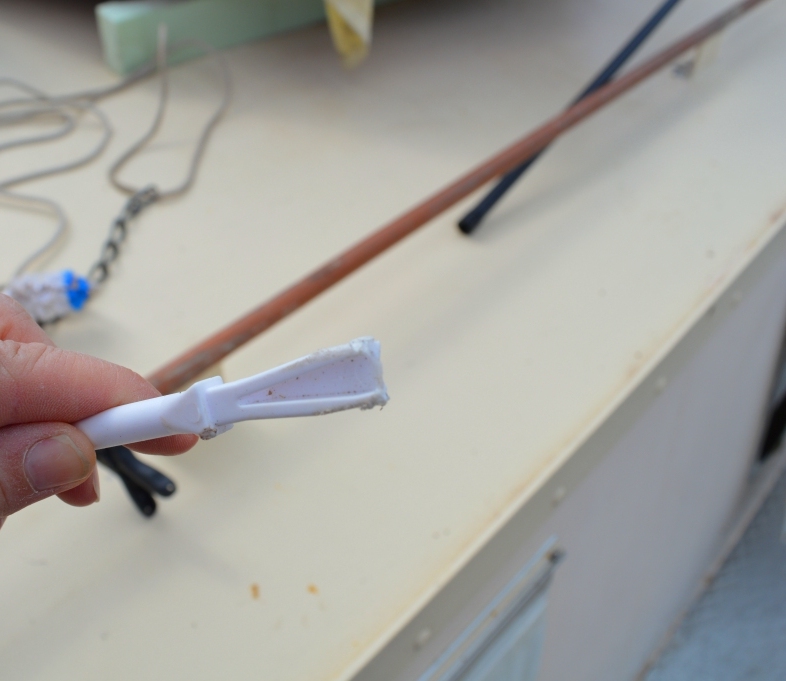
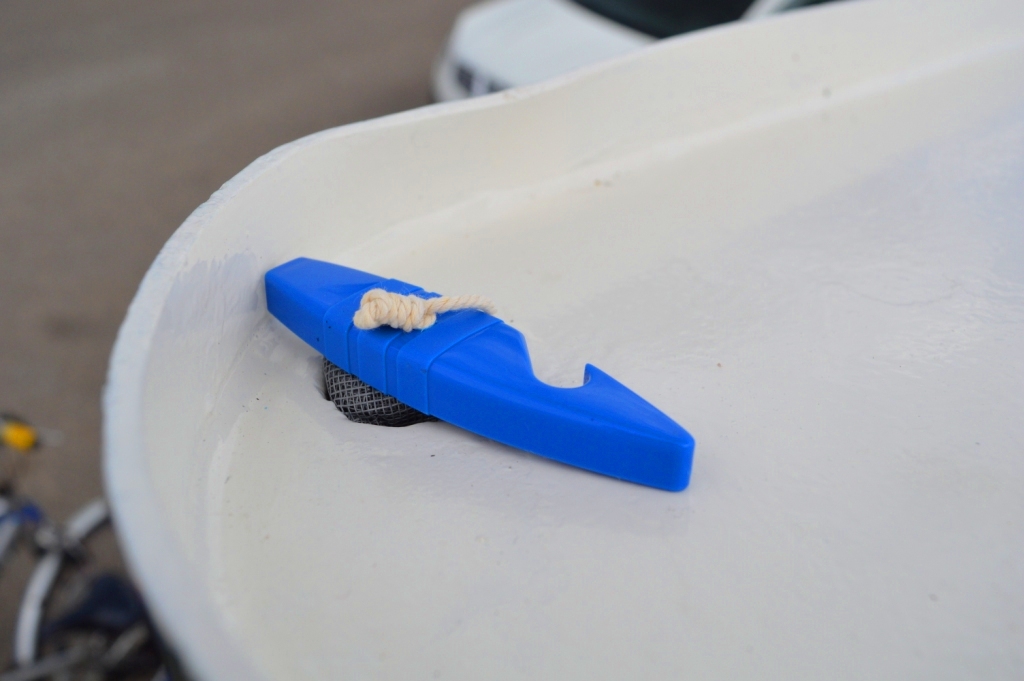
Cleverly designed filters on the top of the wheelhouse. Layers of mozzie netting, cinched together and a plastic handle attached so they don't gradually slide down the pipe. (Plastic came from handle off the pipe cleaner brush) - we have several 'filters' each side.

Not ear-rings, but cleverly designed filters on the top of the wheelhouse. Layers of mozzie netting have been cinched together and pushed into the hole. The plastic handle is attached so the netting doesn’t gradually slide down the pipe. (The plastic came from handle off the pipe cleaner brush) – we have several ‘filters’ each side – from top to bottom.

When it rains we simply have to slide the plastic pipes onto the down-pipes and ensure all the filters are in place. Of course, the roof will have a good wash first!

Now, the sun is shining and there’s not a cloud in the sky 🙂


2 Comments

Rain Catcher . . . and they say romance is dead! Part 3

I’ve been reminded about how crappy sanding a boat can be. I must have whinged about the job a fair bit as Noel bought me an electric sander today – and they say romance is dead!

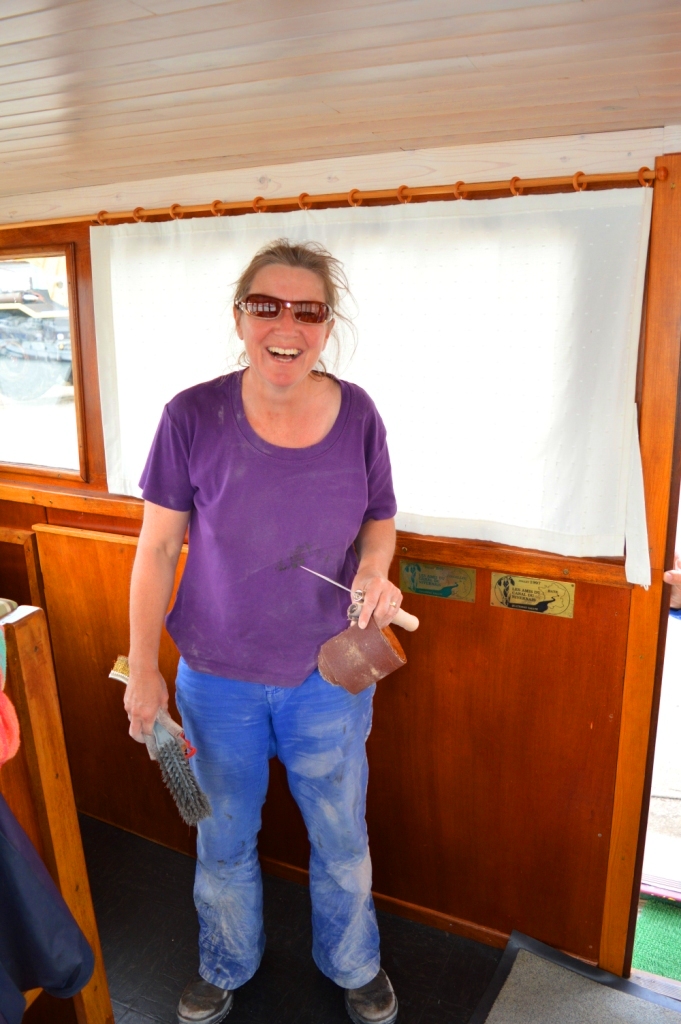
Covered in a layer of sanding dust and looking forward to a beer!

Covered in a layer of sanding dust and looking forward to a beer!

This gift is almost as ‘romantic’ as my first wedding anniversary gift, ‘The 12 Volt Bible’!! But that’s a different, (and a rather incredible), story (more details here).

With the pipes clean I turned my attention to the next part, preparing the wheelhouse roof for painting.

First I removed all the loose paint, then I became a sanding maniac. My sore knees, stiff muscles and the fine coating of ‘dust’ reminded me how much I hate sanding.

Lying down on the job - I was just glad I didn't fall off!

Lying down on the job – I was just glad I didn’t fall off!

But a good painting job is all about the preparation and after one full afternoon and a full morning – hurrah! I could finally paint!

To the paint, I added Rustol Owatrol, Antirouille Incolore, the French equivalent of Penetrol, which makes oil-based paint stick and flow better. I added fifty percent to the first coat, ten percent to the second coat. The mixture is very good at covering rusty parts of steel, provided there are there no loose flakes.

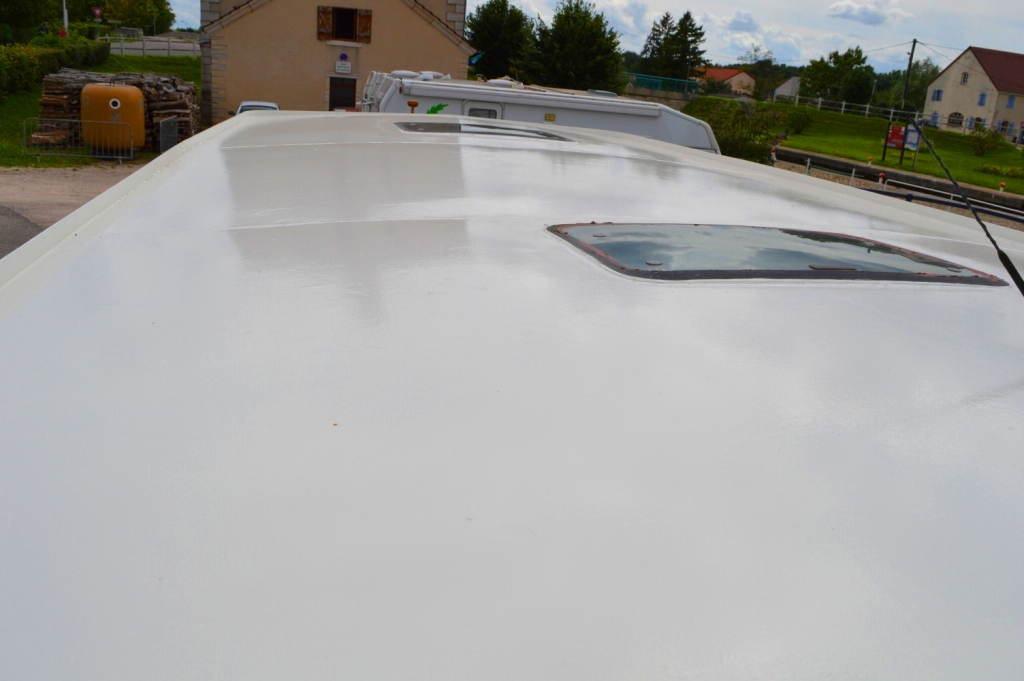
The first (‘scratch’) coat went on well and highlighted all the bits I missed. The dapple pattern from the rain that followed left me a bit peeved! But, the second coat (and final) is now on and I can play plumber next – extending the ‘down-pipes’ to the water tanks.

Before

Before

After

After

My new sander and I will work on the rest of the boat . . . soon . . . when I recover!

Recovery food! Chocolate mouse, macadamia and vanilla ice-cream and strawberry tart!

Recovery food! Chocolate mouse, macadamia and vanilla ice-cream and strawberry tart!


2 Comments

Rain-Catcher – part 2 (It Broke!)

Well the ‘you-beaut-fan-dangled’- cleaning wotsit BROKE! – on its first use! After saying some rather naughty words I sat, and had another drink . . . I mean think.

DSC_0092 - Copy

Where I had ‘made’ the thread, the handle snapped!

I needed:

  • to get the brush into the pipe
  • a brush small enough to go around corners
  • a way to move the brush up and down to clean the inside of the pipe

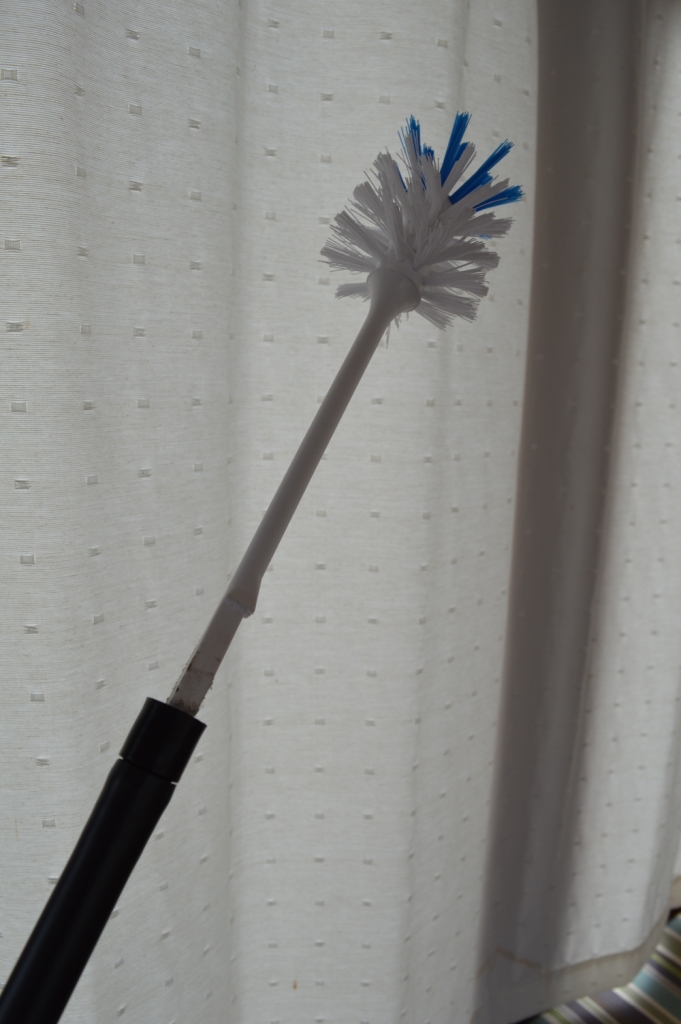
So, I cut the handle off the brush and trimmed the brush down (a new one). Then I drilled a hole through the middle and plaited some string (for strength) and threaded that through the hole. Then, to that string, I tied some strong cord. Ha Ha! That should do it!

Small brush

Small brush

Until I realised it was impossible to get the cord to thread down the down-pipe. After much uhhming and arrhing – I dismantled the gate-chain on the boat and tied that to the cord. This slinky chain slipped down the pipe dragging the cord with it.

Cord and chain

Cord and chain

The top of the roof

The top of the roof

What followed was a rather awkward tug-of-war on the cord, each end, to clean the pipes, but it worked! Success. Now I have to get sanding and painting!


4 Comments

Rain Catcher

A self-sufficient life-style is one of the big attractions to living on a boat. On our last boat, a sailboat, we rigged a rather simple and effective dam on the deck, near the water inlet for the tank – it worked a treat.

On our barge, Noel and I have much work to do. But, first we want to install solar panels and rig up a rain catcher. The solar panels have already stirred-up our creative minds in the way of being able to raise and lower the ‘fixed’ panels; more on that another day.

I started the rain catcher project a few days ago. I needed to sand and paint the wheelhouse roof, but it was raining, so I turned my attention to the down-pipes, first.

Gold coloured 'down-pipe' to carry the water from the wheelhouse roof down to our water tanks (where lock is)

Gold coloured ‘down-pipe’ to carry the water from the wheelhouse roof down to our water tanks (where lock is)

Here you can see that someone has thoughtfully installed down pipes from the roof. We have odd and ends of plastic doohdads to extend the pipe to reach the tank. However, the down-pipes are in need of a rather good scrub.

Pipe and brushes

Pipe and brushes

Here are the weapons for the cleaning job. But I had to figure out how to ‘fix’ the brush onto the plastic (chimney-sweep gear?) pipe.

Searching in the engine room for the right sized nut.

Searching in the engine room for the right sized nut.

We found a nut (well noel did)

This nut fits on the male end of my plastic pipe and therefore if I use the nut as a die, and make a thread on the cleaning brush handle, I could screw them together.

Brush on left with filed down handle and thread.

Brush on right with filed down handle and thread.

I had to file down the end of the cleaning brushes first.

Then slowly ease on the nut (backwards and forwards) and make the thread.

Tahh - darrrr!

Tahh – darrrr!

Finally it all came together, the thread idea worked a treat – so far!

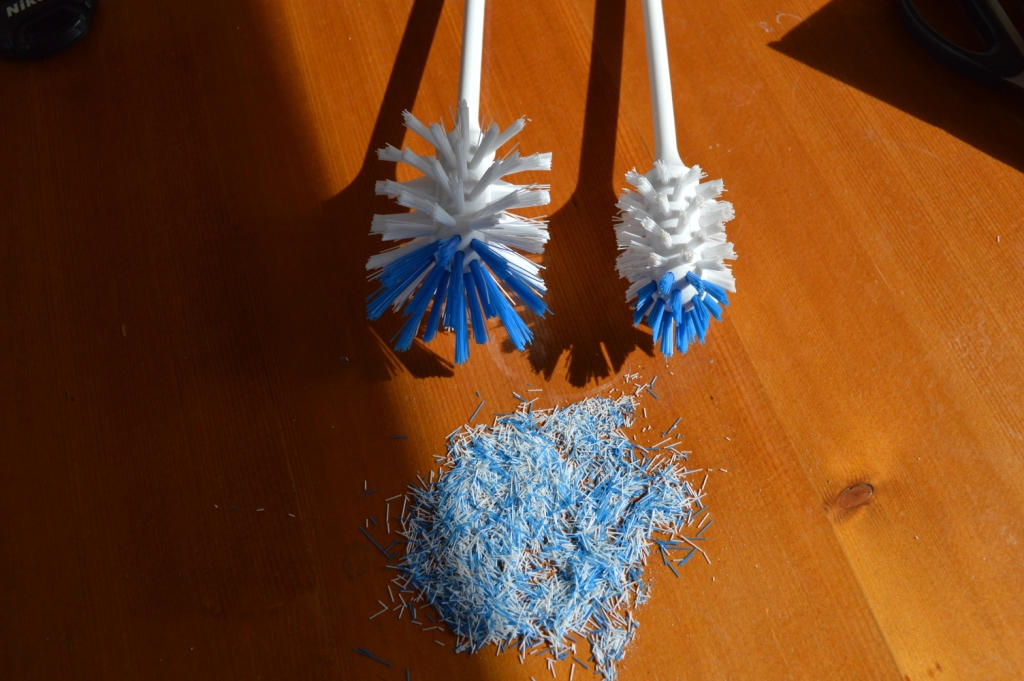
Back up (original sized brush) - and trimmed brush!

Back up (original sized brush) – and trimmed brush!

Then I had to trim the brush, as it is a bit wide for the pipe

DSC_0077

And voila – first stage of the water-catcher complete. 

Stage two coming soon . . .


2 Comments

Cruising Clinic – What budget do I have to purchase a boat?

Only you know your financial situation. It’s time to be honest with yourself!

In the first article we wrote:

1) What budget do I have to purchase a boat? Whatever budget you have it is extremely likely that you will find a boat you love just that ‘bit’ over your budget. This amount does NOT include:a) all the unexpected problems found during survey that need to be fixedb) all the things the vendor neglected to tell you that needed to be fixedc) all those things that just pop up at inopportune times that need to be fixed

d) on-going maintenance and repairs

e) additional equipment (your own ideas/wants)

Summary: Keep at least 10% of your budget for those unexpected issues.

What’s the real question?

The more pertinent question is, what do I get for my money? And, what other factors do I have to consider?

What do I get for my money?

What do I get for my money?

Advice

The best advice is research, research, research. While sailboats vary dramatically in size, layout, design and price, after some in-depth researching you will create a feel for the value presented. Sorry to harp on, but it is all about research. And to only consider the boat purchase cost on its own is foolhardy.

Learn

Researching will expand your know-how. Ask questions, seek advice, you will be amazed how your knowledge grows. We spent two years searching for our second boat, all via internet (we wanted to buy a boat in America to experience the Pacific Ocean for a second time).

$0 – millions

You can spend millions or a few thousand. Actually, a few hundred if you are willing to put in the time/money to make is seaworthy. But then you have to consider whether you want to GO cruising now or WORK for several years on a boat first.

Other considerations

As mentioned previously, it is not just the initial purchase, boats have to be maintained constantly. The marine environment is extremely harsh. Without proper care your boat can quickly become un-seaworthy. The problems will spiral out of control – causing the costs to escalate out of control. Everything that moves wears out and will need replacing eventually, this includes sails. As a guide, everything that moves lasts about ten years, motor, winch, sails etc, then it will need an overhaul or replacing.

Costs to keep in mind: see here for full article on calculating your costs. Your on-going expenditure will depend on:

  • From what point you started, ie condition of boat
  • Equipment on board

A smaller, seaworthy, good condition boat is far better than a large, poorly maintained, vessel that will just become a money pit!

Size matters.

Size matters.

Size matters

The size of the boat will matter. We reckon about ten feet per decade. So:

  • If you are ten years old, you want a sailing dinghy of ten feet.
  • In your twenties you can get by on a twenty-seven footer.
  • When you reach thirty you may want a bit more comfort and so on.

It’s almost like a foot for every year of your life (up to about fifty). However, larger boats can be more expensive (longer length means a longer bill at marina), you may need more gear (longer rigging, larger sails). That said, you can make savings with a bigger boat by stowing more spare parts and stocking up at cheap locations.

Fibreglass/Timber/Steel/Aluminium/Ferro

Boat material will be a factor. Which material do you like working with best? That may make you a saving if you can work on it rather than employing someone else to do the work.

Our priorities when buying a boat

Watertight integrity

Seaworthiness

Material/keel setup

Heavy displacement (for crossing oceans)/handling capabilities

Equipment (is it all working? Can you maintain it?)

Age/condition

Can we accept, repair, replace, are familiar with all the things that are not perfect.

When we bought Pyewacket, we had to install solar panels and wind generators.

When we bought Pyewacket, we had to install solar panels and wind generators.

The Answer

The answer as per cost is dependent on:

  1. Where you are buying (USA, Caribbean, UK, Australia, Europe . . .)
  2. Condition of boat
  3. What equipment does it comes with?
  4. What skills do you have?
  5. What is your budget (allowing for additional unseen/planned costs and running costs)?

More reading

The Real Cost of Owning a Boat: here.

Here’s a neat UK link providing an idea of what you’ll get for your money: here.

More help

Next time we’ll talk about WHICH boat.

Our book, Cruisers’ AA contains lots more helpful information.