My body has been hinting, quite heavily, at the kinds of food I should and should not be eating. I’ve decided to try and listen to what my tummy is telling me and eat less meat; certainly less red meat.
I have always wanted to adopt a healthier way of living and have managed to find excuses. Now, when I seem to be busier than ever, I’ve delved into cooking vegetarian (mostly) meals and I am amazed at the fantastic results.
So, after finding the wonderful farm/vegetable shop four kilometres up the road, I rubbed my hands together, googled vegetarian recipes and off I went – here’s the first week. (I spent 20 Euros on three huge bags of vegetables.)
I used the vegetables I had purchased that day and I used plain old flour instead of cornstarch. I never have all the correct ingredients. This worked a treat.
I cook great rice, even if I say so myself. I cover the rice by about an inch of water (maybe a fraction less), boil until the water goes milky, then put the lid on and turn off the heat. Ten to fifteen minutes later, perfect rice.
This is a fantastic recipe, so easy and so fulfilling.
I stirred in some Tandoori paste instead of ghee. I used olive oil instead of butter, I didn’t use mustard seeds or ground cumin and I used the vegetables I had purchased. Definitely use pumpkin and potato for the top – fabulous!
This fed us for three nights! And I have made it again since, I can’t get enough of this and it fills me up easily.
Curried Lentil Pie – when dished out, add a spoon-full of natural yoghurt – delicious
Fourth & Fifth nights: Left over curried pie.
Sixth night: Chicken stew
Noel bought some chicken. I find it hard to completely cut meat out of our diet. I enjoy it, but I haven’t eaten red meat for a few months now and I certainly feel the benefits.
This was just plain old chicken stew, with all those great ‘in season’ veges, swedes, parsnips, carrots, also onions, leeks, and whatever you have to hand.
I braised the chicken separately first. In the big pot I used vege stock, cup of wine, a few herbs (whatever is to hand – basil, parsley), a bit of sweet chilli and soy sauce. A half a cup of French lentils is a good idea to help fill you up. Perfect!
So easy, tasty and filling.
Seventh & eighth night: Left over chicken stew
Healthy wallet
My 20 Euro shop lasted a week-and-a-half (and I still have a whole cabbage left). I did another shop this week, and that cost 13 Euros – for two enormous bags of veges. This week I tackled:
We’d worked hard that day – so I added pumpkin and potato mash and a delicious salad of spinnach, fresh parsley, carrot, zuchinni, peppers, onion – yum!
We were given some walnuts and did I have fun cracking them – then I made this wonderful, truly fantastic cake – with a healthy twist!
I didn’t want to use double cream and I had only ‘normal’ yoghurt. So I spooned out two pots of yoghurt (small pots) into coffee filters (one pot per filter), then, I stood the filters in a colander, and let all the liquid drain away. Voila! Thick (Greek style) yoghurt – thick enough to use as a cream substitute!
Draining the yoghurt – for 1-2 hours.
It worked perfecting – the icing is so sweet that the yoghurt balances out the sweetness and in all honestly, tasted just like cream!
Not as pretty as the recipe picture – but absolutely delicious!
I was so proud of my efforts – I had to include two pics!
Healthy living
I am loving the ‘zone-out’ time cooking is giving me. My body is enjoying the benefits and so is our bank balance! The big plus is finding recipes that are fulfilling, I am a big eater. Now, I can eat as much as I want and I’m not piling on the pounds!
I;d love to hear from anyone who has great recipes to share.
This week a ‘soon-to-be-cruiser’ asked Noel and I to recommend useful courses to study before starting to cruise. The person in question was already signed up for Coastal Navigation and Deckhands (with all that great safety stuff).
The learning is endless, but immediately we thought of weather. (Also a radio license is a good idea too).
Knowing weather is a trade, there’s a lot to it. Meteorological headquarters all over the world confer daily to create forecasts. But knowing how to read the basics of a synoptic chart, is important.
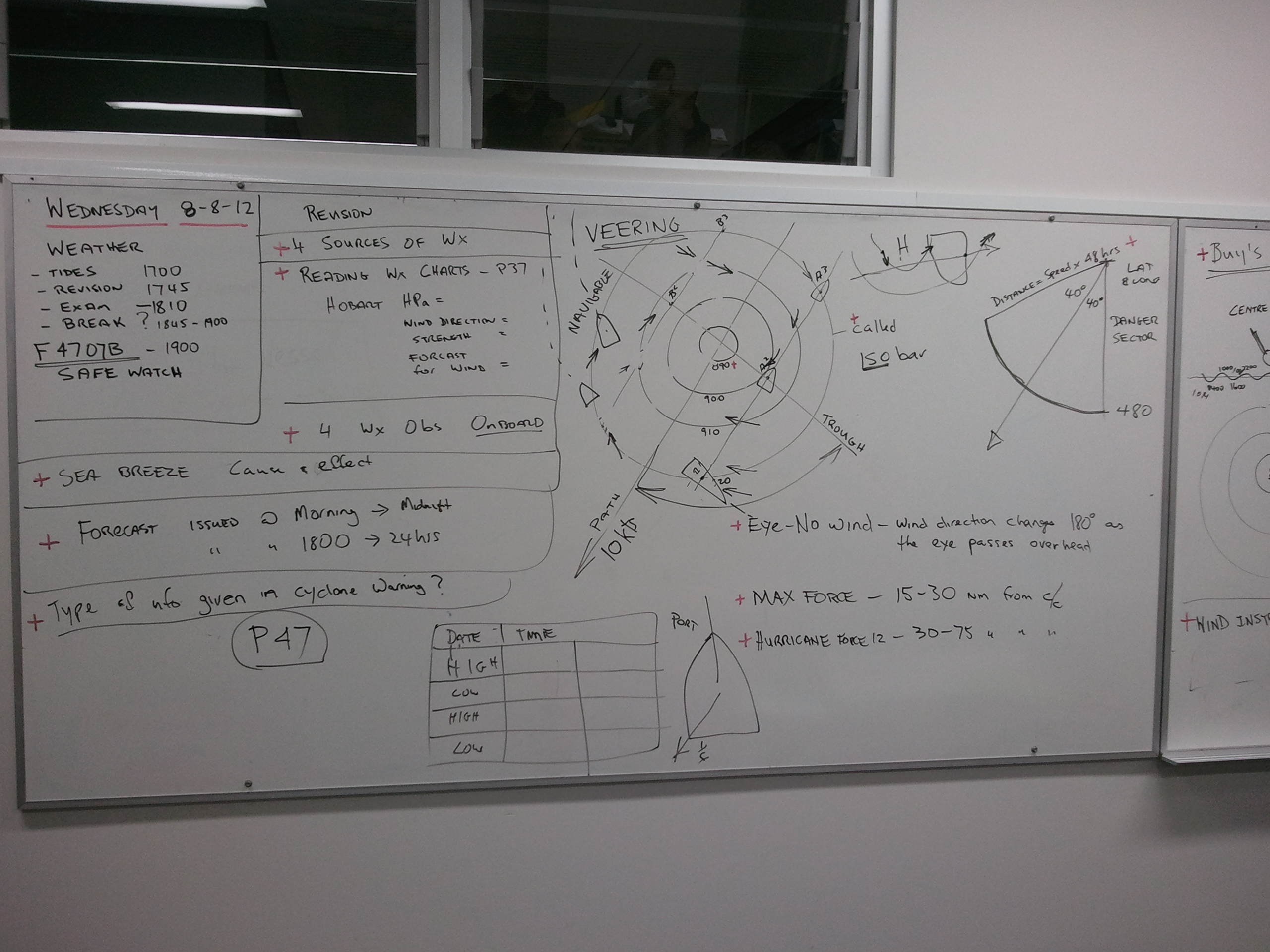
Noel teaching commercial maritime – weather came into most subjects.
There are many ways to download weather. Many people rely on internet these days, and you really notice that when trying to find a free station on the SSB (long range radio) to talk on!
We used weatherfax and downloaded the really neat program from JVComm – thereafter all you need is a connection from your radio to your laptop. Every day, we could download, 12, 24, 48 and 36 hour forecasts, both wind/wave and synoptic charts.
The synoptic charts cover a large area and that’s the key. You can SEE what is happening, and what will affect you, and how. You can forecast.
Here’s a brief break-down of this synoptic chart:
Remember that all systems move from west to east.
Isobars close together, is a steep pressure gradient with corresponding increase in wind strength. Top left, is a good example of isobars becoming compressed between the low in northern Japan and the high in the Atlantic.
A cold front indicated by pointed triangles, indicating the direction of movement. The red semi- circles indicate a warm front. With a front you get a rapid change from low to high pressure.
The mix of triangles and semi-circles is an occluded front.
High pressure ridges and low pressure troughs are usually indications of unsettled weather – possibly squalls and precipitation.
Sharp turns or bumps in isobars generally indicate disturbed weather. Usually something unpleasant!
The two highs at the top will eventually join together, once the cold front has passed. This will create the usual alternate Highs, then Lows.
You can see the doldrums along the equator – no isobars!
Widely spaced isobars indicate light variable winds.
Zig-zag lines are a high pressure ridge – usually containing squalls.
Dashed lines are a low pressure trough – usually indicating rain and wind
Weatherfax frequencies are available worldwide – here’s the list.
Hints and Tips
• Become familiar with the Weatherfax process and schedule prior to departure. If you are in a marina, the signal may not work very well due to interference from masts and equipment.
• To utilise Weatherfax all you need is a good SSB radio (HF), a laptop and an earphone connection from the radio to the laptop. Free software for downloading Weatherfax is available on the Internet or here.
• We usually received a wind/wave forecast for 24 and 48 hours, and synoptic charts (isobars and wind strength) for 24, 48 and 72 hours. The wind strength arrows can cover a large area though.
Weather was in most nautical subject, but had its very own subject too.
Receiving weather via Weatherfax:
• You must deduct 1.9 kHz off the listed frequencies.
• To receive a good Weatherfax is easy, but the atmospherics can cause disturbances. Ensure you have done everything you can to receive a good picture.
• Turn off EVERYTHING:
• the fridge
• wind generators
• solar panels
• inverters
• electronic steering gear (get someone to hand steer for a while or use the wind vane)
• all electrical devices
• solar panels (install a switch that lets you manually turn them off)
Deciphering pictures:
We like the synoptic charts as they show you why the wind is doing what it is doing, and it can show you an escape route. You can clearly see what is coming.
• Download the worldwide frequency list from here.
• Do not forget:
• Subtract 1.9kHz from the given frequency.
• Some of the listed times are not exact and can change.
• Faxes can come a few minutes earlier and often later than the scheduled times.
Weather watching at the Gambiers, where a dip in the isobars gave us a good-hiding!
Other boats downloaded weather that was more detailed, but to specific area. It didn’t show the big picture. They could see what would happen today and tomorrow but not long term, whereas we could view a front coming for 5 days, (and we did!) It is amazing to see it on the weather fax then on radar then visually! And then feel its impact!
Wind/wave chart for same area as synoptic chart.
Note: That the wind chart stops at 30°N – so you can’t see the gale that is on the synoptic chart!
More Information: Cruisers’ AA (accumulated acumen) has all this information and much much more. It is now available on Kindle for not much more than a decent cup of copy. (No.5 on the bestseller list! – Amazon)
More about us: Noel and I have sailed thousands of ocean miles and have worked internationally on commercial boats – in Australia we taught commercial maritime and all our accumulated knowledge through recreational and professional sea-miles is incorporated into Cruisers’ AA.
Me on a practical assessment for radar and navigation – I always asked students to interpret the weather.
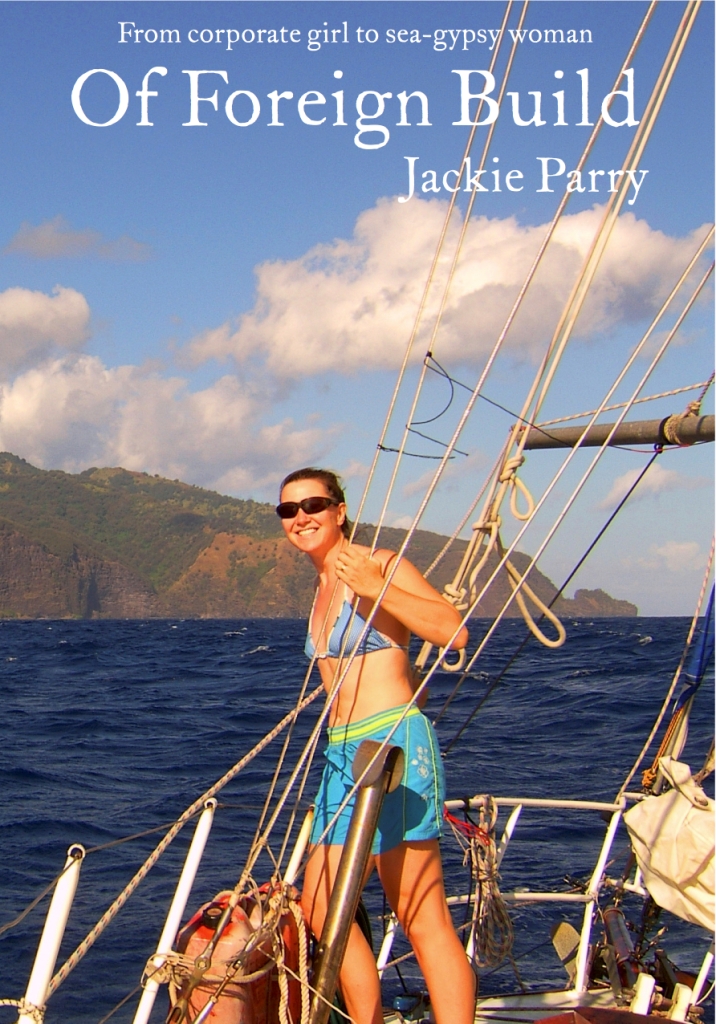
Of Foreign Build is out next month (November) – but you can win a copy now, simply like our FB page: Noel and Jackie’s Journeys and Share this announcement (via FB) and you go in the draw. It’s as easy as that – winner announced Tuesday 21st October!
The two days that inspired my last blog, were just two days. Rude visitors on hire boats made the busy stretch an arduous journey. Our patience was tested to the extreme, but it was just two days!
Shower of autumn golden leaves.
In the last two days since, we’ve only seen two hire boats on the move and no other boats whatsoever. The tie ups near the locks are easy, quiet and safe.
The autumn leaves shower down on us as we putter through, burnt oranges, flame reds and deep purples. The ducks still laugh at us as we pass by, the Herons flap lazily across our bow and the otters paddle beneath the dappled light.
Dappled light – stunning
With great tie up places and crisp, blue days of low humidity; no bumper boats (hire boats) and perfect countryside views, the days are a joy.
Helpful lock-keepers together with helpful public that push the buttons on the automatic locks or catch our lines have made the last few days perfect.
I didn’t talk to my husband for two days when his peculiar answers to my naïve nautical questions reached my bewildered ears. Back then, as a mere fledgling to sailing, my raw researching met brutal honesty. Seeking a sailboat and home, to travel the planet, I tried to grasp the financials and what, exactly, was I letting myself in for.
“How much does it cost to buy and then maintain a boat?” Coming from the corporate world I was gearing up to write in-depth project and budget plans, but abruptly shook those thoughts from my organised head when Noel replied.
“It’ll take every penny we have.”
“Oh right, well, what’s so great about sailing?” Expecting to be assailed with vivid pictures of slicing, splendidly through clear, flat water, with handsome palm trees and white sandy beaches supplying a dreamlike backdrop, the image shattered as Noel’s ruthless reply tore through my reverie,
“Getting to port,” he said, “and the local bar”.
Seven years later and over 40,000 miles clocked, I can see the wisdom in his answers.
Getting into port is one of the best bits! Daniel’s Bay, Marquesas.
Enduring the Escapade
Long term cruising is an incredible adventure and hard work. Arriving in a new country or town, our thoughts steer to, how do we check in? Where do we get fuel and potable water? How much is it?
The men talk amps and engines the girls talk laundry and supermarkets. Noel, Mariah and I are on our last leg in the superb south Pacific Ocean. Aside from reflecting on our magnificent voyage so far, a few ludicrous “learning’s” deserve a mention.
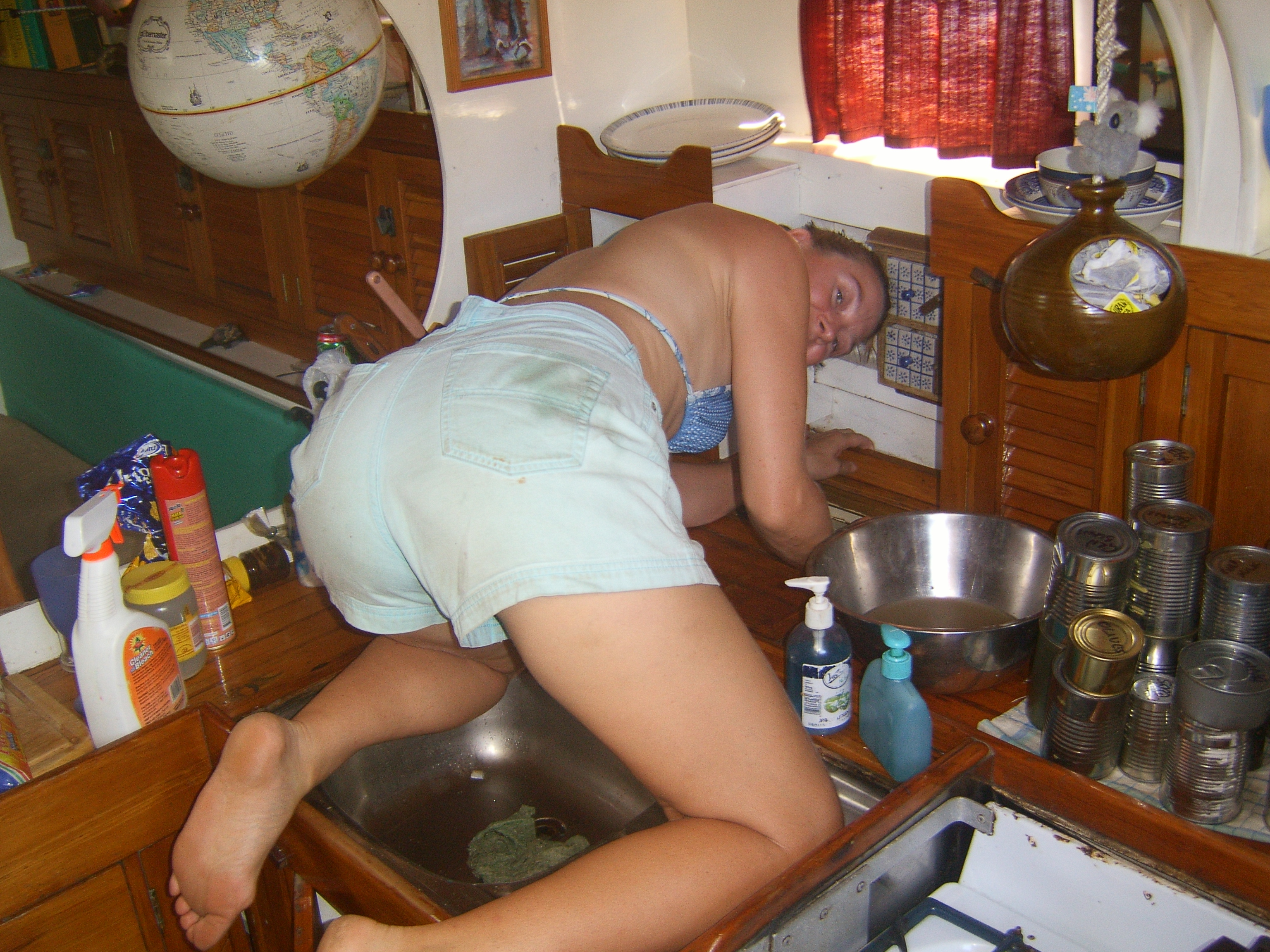
Cleaning cupboards reality – it is not your ‘average’ kitchen.
First, let’s be positive. Our escapade divorces and insulates us from the world’s day-to-day problems. We are not ashamed to bury our heads in the sand and enjoy the “ignorance is bliss” scenario, while we can. News never changes; it is sad and depressing today and tomorrow.
Frequently we meet like-minded people, of all nationalities, where age is no friendship barrier. Hooking up with similar sized boats and sharing the ocean brings the comfort of companionship and the joy in sharing the dolphins that play on our bow during those perfect sailing days.
Mostly, for us, it is the freedom of living simply. We have no letterbox where small bits of paper with large numbers intrude into our sanctuary, sucking dry the bank account to allow landlubber luxuries. And yes, there is the odd G & T (Vodka for me please) while watching spectacular sunsets, doing an anchor pirouette, savouring the sedate, shifting views as we would fine wine.
Secrets of the initiated
Over the year’s advice, hints and tips have deluged our salt saturated minds until our armpits are all but overflowing. We thought we’d heard it all, but here are some unmentionables that we learned along the way:
(1) Constipation – the most fluid of us struggle on long trips. On watch, the comfy cockpit seat will become well acquainted with your behind, causing, what we refer to as – the cork effect.
(2) Seasickness – the toughest of us will become seasick. After corkscrewing for 48 hours solid, your tummy will give up all hope of hanging onto to anything. Most of us unwillingly feed the fish at some point. It is like puberty, you just have to get through it. Despite suicidal thoughts during the worst bouts of seasickness, once you have reached your haven and spent a few days in flat water, going back out into lumpy seas suddenly becomes a good idea again. On the plus side it is a great diet!
(3) Toilet tantrums – at some point most marine toilets will block. If you have not been allocated the repair task, leave the boat while it is being fixed. Build up of pressure while trying to pump it clear will create the most spectacular explosion. Becoming AWOL at this time will help avoid a good dose of (5).
(4) Landlubbers – your farewell from home will be tearful, exciting and filled with unfulfilled promises from friends and family, who assure you that they will keep you up to date on home happenings. After two years you will be grateful for an email once every six months from your bestest buddies, all of which think you spend your entire life sitting on the aft deck sipping G & T.
G&T on the aft deck – after this I’d need one.
(5) Arguments – the closest relationship will suffer at times. Falling out with your spouse is inevitable especially when you are woken three and a half minutes before you are due on watch at 3 am. Learn to talk about it and laugh, it can get damn lonely otherwise and create a yearning for (4).
(6) Moon-fright – the moon is crafty bugger. You know it is due to rise, but as you scan the horizon there is a luminous light that assumes the shape of an approaching aircraft carrier. This will be the moon, strategically cloaked with black cloud to form heart-stopping shapes. However, the moon will become your buddy, especially if dealing with number (5).
(7) Cravings – two days out of a long haul sail you will desperately desire all those things you haven’t got. Roast chicken, ice cream…
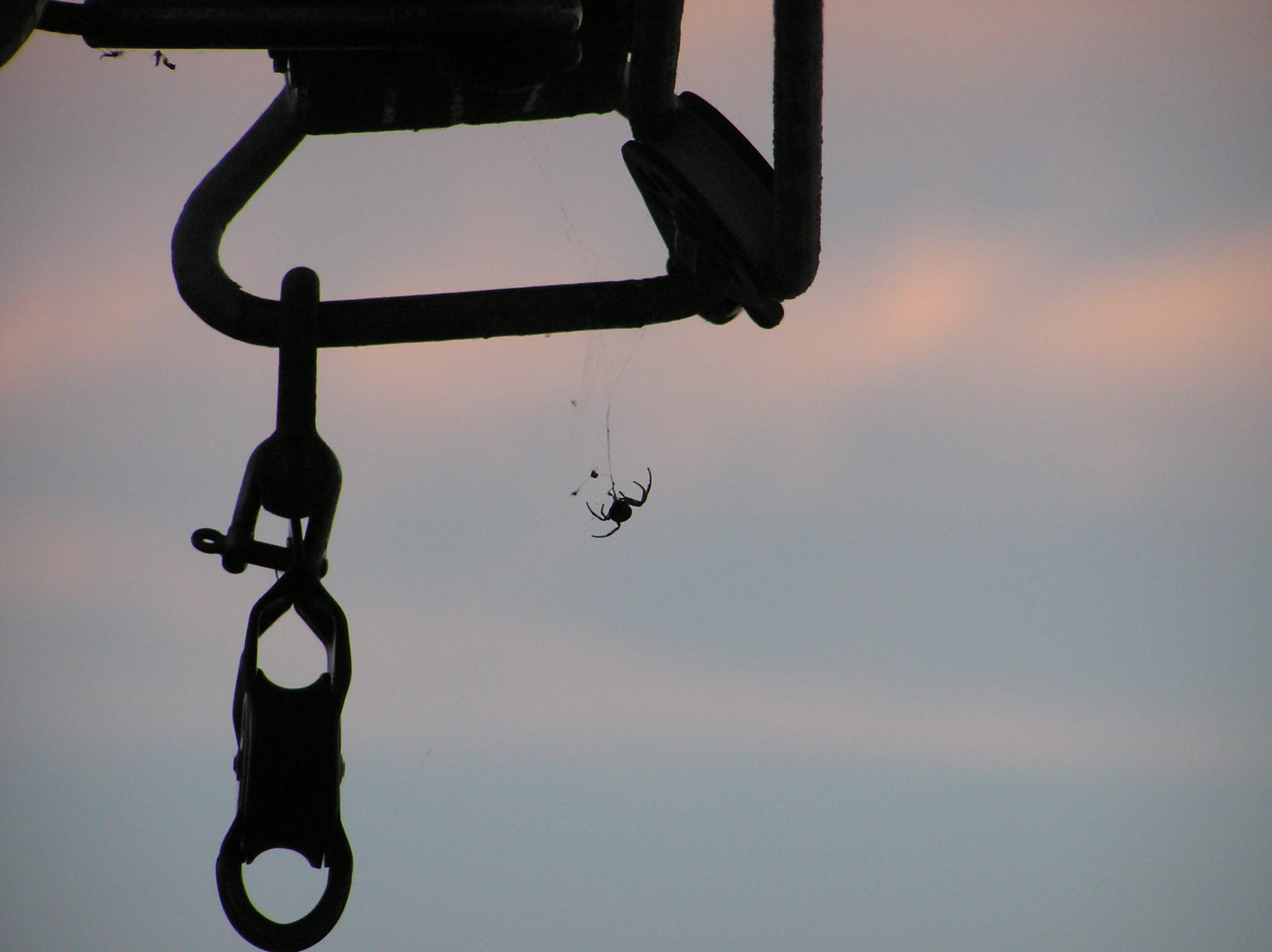
(8) Spiders – having abhorrence to the skittering critters my husband assured me that life on board meant no spiders. This seems reasonable, after all we are away from land a lot of the time. Reality is that I am sure we have had a hand inter breeding crawly critters from different countries, probably creating a whole new weird and wonderful breed.
(9) Time – boat maintenance is a full time job in addition to washing, cleaning and sourcing supplies. If you are fortunate enough to momentarily catch up, items (1) or (2) – or both if you are unlucky, will fill the gaps. At the end of each day you’ll just have time to read a page or two of that book you’ve always wanted to read, before sparking out.
(10) Fishing – you will fish once per trip. After you have heaved the huge dolphin fish on board and it has thrashed itself to death, splattering blood over the clean, white cockpit and your battle weary body, the fishing gear will gather salt in the Lazorette for the rest of the journey. By the next trip, you will have forgotten the sticky mess and break out the lines.
(11) Sinking – on your watch, typically in the graveyard hours, you’ll check the bilge for the last time before the welcome warmth of bed and the bilge will be full of water. Instantaneously you are wide-awake and have no problem in screeching at your partner who is obviously having their best ever sleep. Turning the mains off is not an option and two hours later you will find the solution to the problem is something as simple as greasing the stern gland. Finally, you’ll crawl into bed and the stampeding adrenaline will keep you awake until twenty minutes before you are due back on watch.
(12) Plip-plop – you will loose something overboard, deal with it, it is gone.
(13) Fitness – you will not become fit sailing. Although you do become trim, see (2).
(14) Turning back – face facts that the storm you can no longer punch into has beaten you. It is not failure to turn back, it is common sense and above all the boat’s and your safety – also helps relieve item (2).
Fixing a sheared pin in an exotic place (Tahiti).
(15) On a long passage – when the fresh food has all gone (and if you are like us, without fridge) after a week tinned food will taste all the same. It will have that unmistakable metallic flavour (tinny flavouring assists number (2)).
(16) Dust – dust will collect with intensity, especially in those tiny, boat shape, awkward places. Adds to (9).
(17) Company – your partner is only ten feet away sleeping below, at that time you are single-handing. It can be lonely, maybe a good thing if dealing with (1), (2) or (5)!
(18) Plunging – on moonless nights you plunge into thick darkness, with peripheral vision coming to a shocking end at the bow. It’s best not to dwell on this too much.
(19) Meteorites – the dark nights are abundant with “shooting stars”, but watch for the big ones. Out of nowhere, a spot light will beam down on you while you sit quietly in the cockpit minding your own business. A huge, bright meteorite will give you occasion to create a few more grey hairs.
(20) Advice – some will be good and some, well, let’s just say, some will be totally fictitious. You will meet some gold medal winning “know it alls”, for example this article, is it fact or fiction? – best way is to get out there and find out for yourself.
Coming into glorious destinations, like the Bahamas, you can never sit back and relax.
For lots more great tips, tricks, ideas and advice on living on board, see our book Cruisers’ AA.
Thirteen years ago we were robbed here. Here’s where we tied up, near the town of Roquemaure.
New buildings just over the bank.
We were on our ocean going sailboat, all 10 metres of her and having a grand old time taking time away from rolling oceans to carve a path through the middle of France.
With our mast prone.
With our mast lying prone, our make-shift tarpaulin and determination, we made our way up to the UK, where Noel fulfilled a dream he’d been harbouring for many years.
With our mast where it should be!
To find out what happened when we were robbed and what Noel’s achievement was, it’ll cost you the price of a cup of coffee.*
Of Foreign Build, my book detailing these and nine years of sailing escapades, will be out this coming November, details here. (Follow my blog to be the first to learn about up-and-coming freebies!)
Here’s some pictures to whet your appetite….
The Big Chute in Canada (yes, that’s our boat up there – and us!)
More canals – this time Chicago
We were thrilled to sail into New York
On ‘reef’ watch
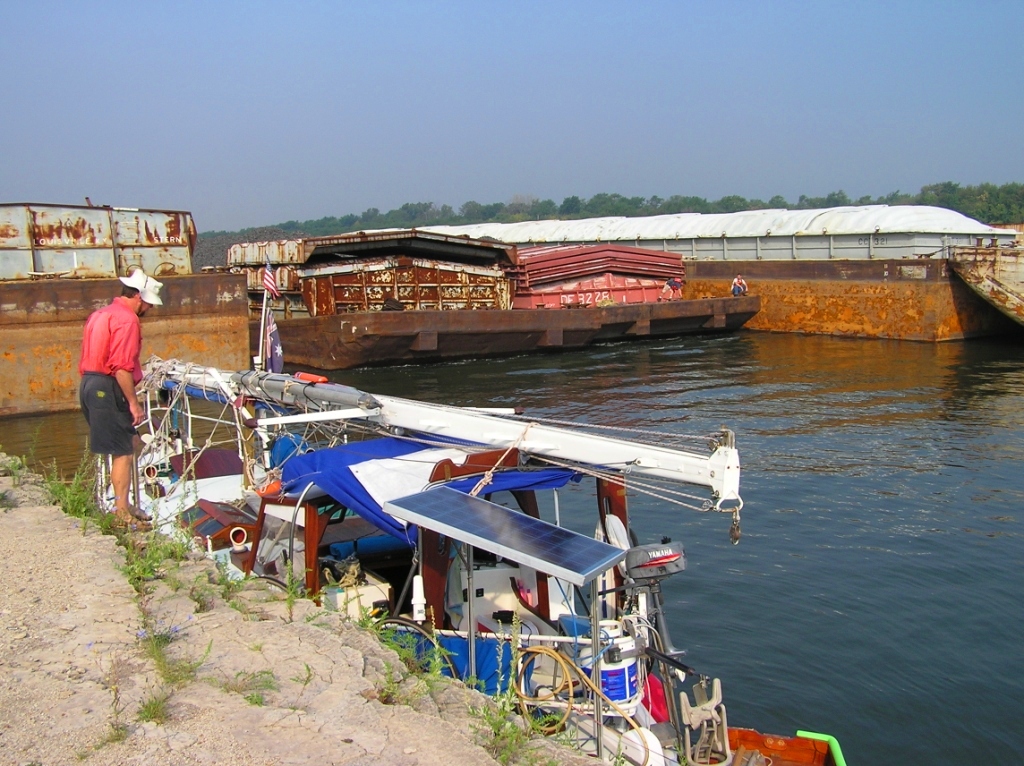
More canals – where? you’ll have to buy the book – note how we are dwarfed by four enormous barges – 2 tied up on each side and two coming down the middle together… we just slipped into this space in time!
We’re having a grand ride south, assisted by the current, a twenty knot breeze and a rather splendid DAF motor. We are now near Avignon and enjoying swinging at anchor again.
Here’s a summary of our eight-day trip so far:
The ugly
A pretty child painted on the side of a nuclear reactor chimney – the child’s legs glowing with what can be assumed as contamination: The de-nuded hill-side to fulfil the desire for pretty stone houses.
Nuclear power station and denuded hillside
The good
Fine views, striking ruins, tranquility, safety, enjoyment, togetherness, travel and movement watching France pootle-past; while autumn gathers momentum.
A pretty place
The interesting
The vast stone towers remind us of wombats. What do furry Australian creatures have to do with French ruins? Well, wombats have this odd behaviour where they pooh on stones – not grass, or pavement; on stones and only stones. The French have this odd behaviour of finding the tallest, skinniest, highest peak and building a stone fortress upon it.
The Australian wombat. (Picture not taken in France!). Image courtesy of Michelle Meiklejohn at FreeDigitalPhotos.net
The amusing
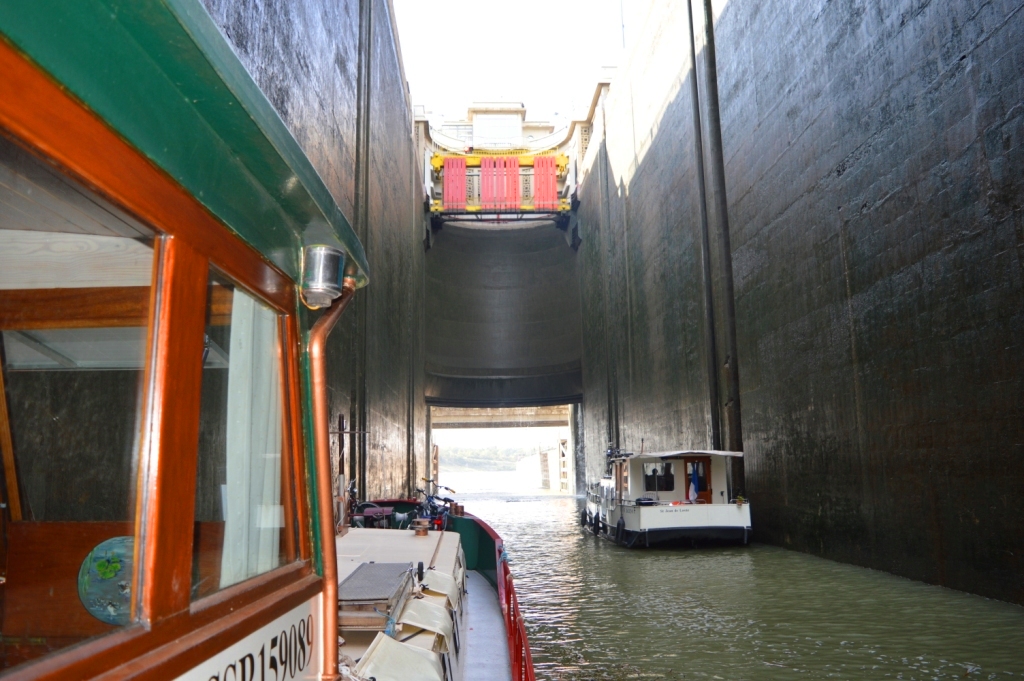
While coming out of a rather large lock (drop of 17 metres or 19 metres, depending which book you read) we were met by three ships all vying for the right position to make an entrance or to tie up. The vast volume of water that had just been disgorged from the massive lock left swirls and eddies to test the most skilled skipper. I was at the helm, Noel looked at the wall of ships, spinning with the currents and said, ‘Yikes, just tell me when we’re through safely, I have my eyes closed.’
They aren’t swear words. But Noel has his, and I have mine.
They are our verbal duelling swords. Each is sharp and effective at putting a shiver of fear up each others’ spine.
It’s a new tactic for Noel. Whenever I say, “I have an idea.” He stuffs his fingers right in to his ears and sings as loudly as he can, until I get the hump and say, rather sulkily, “Right, I’m not telling you now.” Which is, of course, his desired effect.
Don’t let the innocent face fool you!
So, in addition to this tactic, whenever I mention my B word, he slinks off and starts researching his B word.
Have you guessed them yet? Mine is Books and his is Boats!
Image courtesy of Supertrooper at FreeDigitalPhotos.net
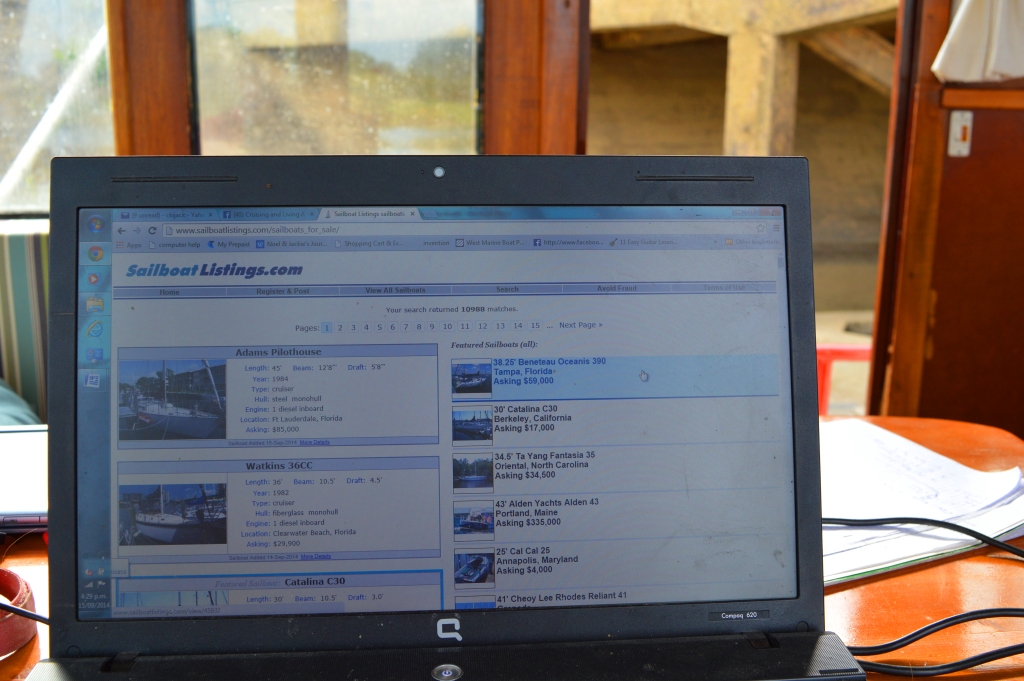
When I was talking about more book ideas yesterday, Noel went very quiet and I caught him looking up sailboats for sale!!
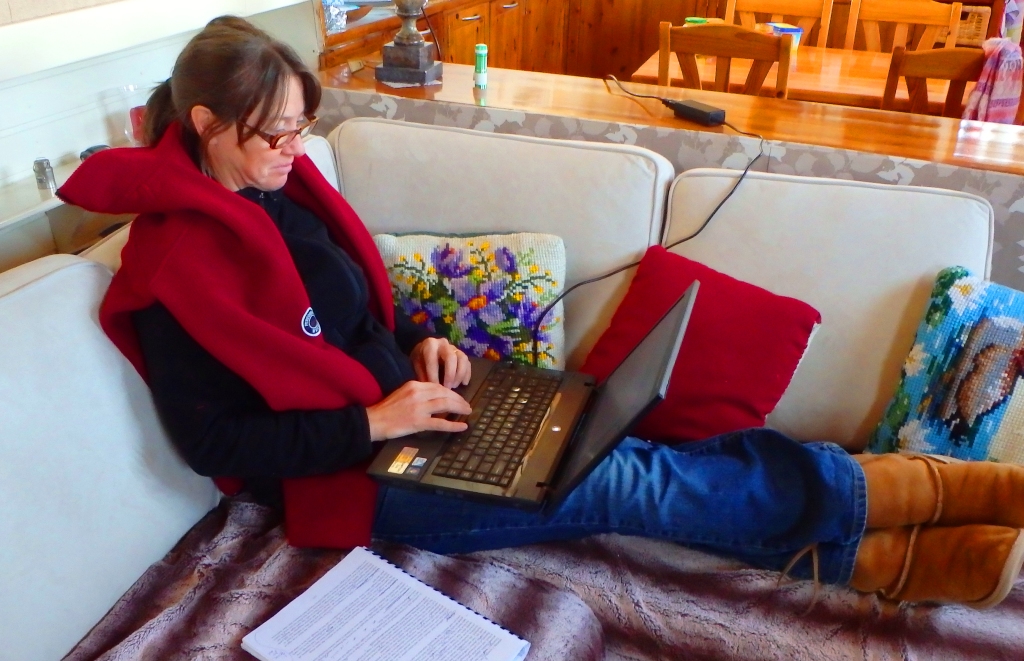
With 50 years combined professional and personal knowledge and thousands of ocean miles, we still spent two years searching on the internet (while working on shore) before viewing boats (in San Francisco) and purchasing our second boat, Pyewacket II. Join groups in FB, cruising web-pages and read blogs that are relevant to your situation – ask questions, keep asking questions. Read, read, read.
But, usually, the longer the boat the more cost involved, more antifoul, heavier/longer rigging., etc, but with care & knowledge it doesn’t have to be too much more. Owning and maintaining a boat that is already in a seaworthy condition is pretty much a full time job. If you want to go cruising sooner rather than later, you do not have time for a major fixer-upper.
How much work do you want to do before you GO cruising?
3) Is it better to buy a boat from a broker or privately?
You may not have a choice. We purchased both our boats privately and sold them privately too. In the past, we thought that brokers charged too much for their service. However, we sold our friends’ sailboat on their behalf and quickly found out that doing a good job of selling a boat is an incredible amount of work. If the boat you want is for sale via a broker, do some research on the broker – be prepared. But, try to form your own opinions on the broker and remember when you are buying, the broker will be looking out for the seller (who is employing him). If you are buying privately carry out relevant checks (see below).
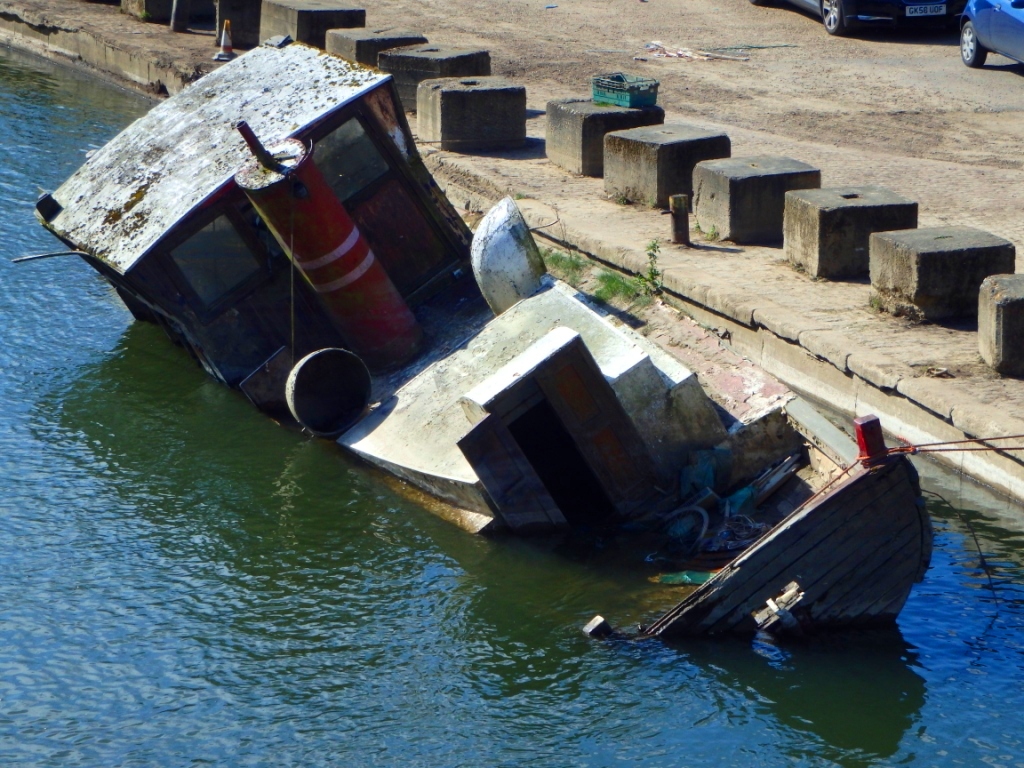
4) If a boat seems cheap, ask yourself why?
Is it just circumstance? Is it the market? Or is there a problem that needs addressing. Keep this in mind when viewing.
5) Verification of details
If you are buying a boat, research and verification of all the detail is extremely important and if it is all new to you, ask a friend who has some knowledge to help. If you are buying privately, we recommend that you hire the services of professional document advisers/escrow agent.
Verify:
What equipment is being left on board
Who is paying for what during survey (paint, additional work that is necessary while on the hard) – make sure this is ALL clear
There is no money owing on the boat
The owners ARE the owners
Timeline for everything to happen succinctly (booking haul, surveyor out etc)
Can you have your deposit returned at survey stage if you are not happy for any reason?
6) How do you view a boat?
We viewed many boats and we were always startled by so many differences.
There is never a foolish question, Ask, ask, ask – research, research, research.
Check everything works
Start the engine, watch it working
Try the bed, enough room for you?
Stand at the sink – are you comfortable?
Find the reason why there is oil under the engine or water in the bilge.
Do the heads flush properly?
Sample the water on board, it is a good indication of the state of the tanks.
It is imperative that you choose your own surveyor
Is it seaworthy?
7) Technical specs
Ask lots of questions about the boat. Some of the most important things to know are:
Its condition, is it seaworthy?
The length over all (LOA)
Displacement (weight)
Draft (how deep the water must be in order to sail)
Age of the vessel
Number and types of sails on board
Be sure to ask if there’s any equipment that is presently on the boat that will be removed by the owner prior to the sale. For example, some owners will remove electronics like televisions, GPS systems, and even radios.
How regularly are the batteries charged/maintained
Is there a maintenance log book available for the engine?
At survey, you could have an engine oil analysis done (if available).
8) How many viewings? A test sail?
We always arranged a second and third visit to boats that interested us. You must spend time on board, you are not wasting people’s time if you are genuinely interested in the vessel. If we felt rushed when looking at a boat (or were constantly distracted by the broker/seller) – we viewed this as a red flag and thought there were problems that were being hidden. When we purchased our boats and when we sold our boats, the agreement was:
A test sail was arranged after the deposit was received (usually 10%)
The deposit was refundable if the test sail didn’t ‘work’(!)
The deposit is a good faith payment that helps filter out time-wasters wanting a day on the water
The deposit made the potential purchaser responsible, not so gung-ho!
9) Keep Track
If you are viewing several boats, take pictures of each. Start with the name and a full picture, then take pictures as you go through the vessel, otherwise they will all blend in to one. An organised notebook helps too. Jot down what you liked and disliked for later reference.
Finalise the test sail detail prior to going… how long, how far, deposit?
10) Buying the right boat
Try to restrain your emotions. While you should listen to your heart, you must follow up with your brain and acquired knowledge or your bank balance could get hurt and your safety may be compromised. Do thorough research. However, eventually your emotions will play a part.
Be broadminded and prepared to look at something you hadn’t considered previously. We started looking for something in the mid 40ft range and ended up with a 51 footer.
Cost considerations should span out to marinas or moorings. Do some research on this if you are interested in a boat in a specific area. You will need to haul it out for a survey (at your expense). It is quite likely you will have to update safety equipment: Fire extinguishers, EPRIBs, safety equipment, life jackets etc.,
Don’t forget registration will have to be transferred, this can be a sizeable expense at times.
11) Surveyor
We had all our boats surveyed. A surveyor will help verify the value of the boat and the potential expense involved in any restoration. AND highlight problems.
12) International purchase
If you are purchasing a boat in another country, research the import duty for taking it home and any tax implications in the country you purchased the boat.
13) Make an offer
Brokers will pass on any offer, it is not up to them to turn it down, they are obliged to pass it on. Put a value (you know what it is with all your research, and start low. You can go up, but not down!) The process is similar to buying a house.
Haul out and surveyor is usually at buyers cost.
14) Checks!
Check and double-check all paperwork, official numbers, licences etc. Make sure each engraved or painted-on registration number matches the paperwork.
15) Lastly
Don’t forget that boats can vary wildly – an acceptable 34 footer in one design may be too small in another design… good luck!
If you haul out for survey (and all goes well), you may as well anti-foul while you are there.
See our books Cruisers’ AA (accumulated acumen) for over 1,800 tips, tricks, ideas and advice on living on board.
And –coming soon– Of Foreign Build…… From Corporate Girl to Sea Gypsy Woman…. following the links above.

























 Jackie Parry - author