Well the ‘you-beaut-fan-dangled’- cleaning wotsit BROKE! – on its first use! After saying some rather naughty words I sat, and had another drink . . . I mean think.
Where I had ‘made’ the thread, the handle snapped!
I needed:
to get the brush into the pipe
a brush small enough to go around corners
a way to move the brush up and down to clean the inside of the pipe
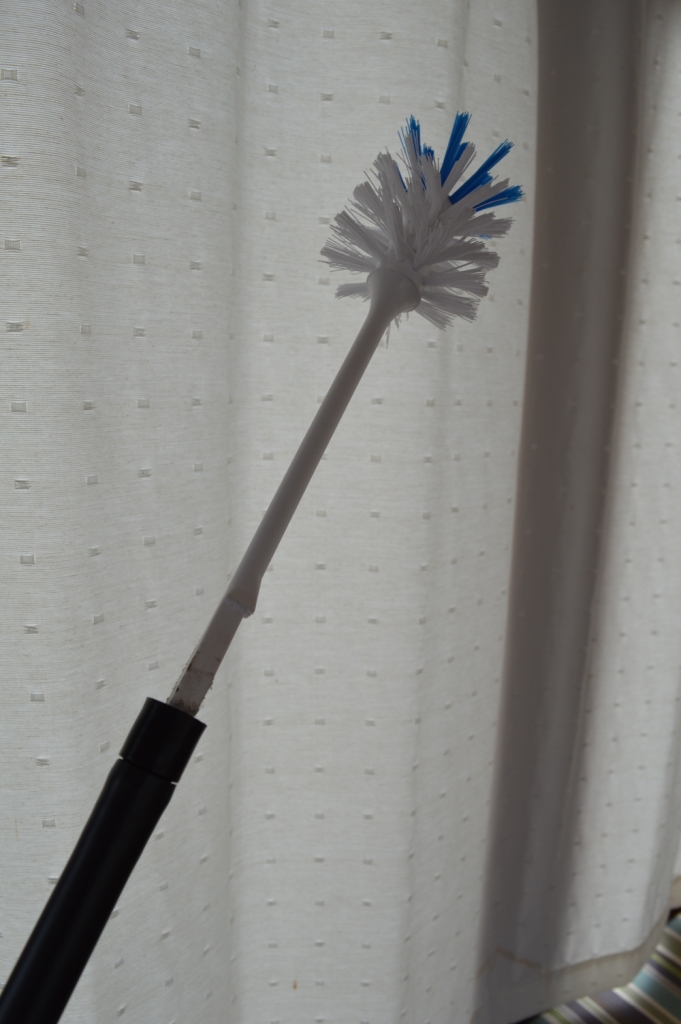
So, I cut the handle off the brush and trimmed the brush down (a new one). Then I drilled a hole through the middle and plaited some string (for strength) and threaded that through the hole. Then, to that string, I tied some strong cord. Ha Ha! That should do it!
Small brush
Until I realised it was impossible to get the cord to thread down the down-pipe. After much uhhming and arrhing – I dismantled the gate-chain on the boat and tied that to the cord. This slinky chain slipped down the pipe dragging the cord with it.
Cord and chain
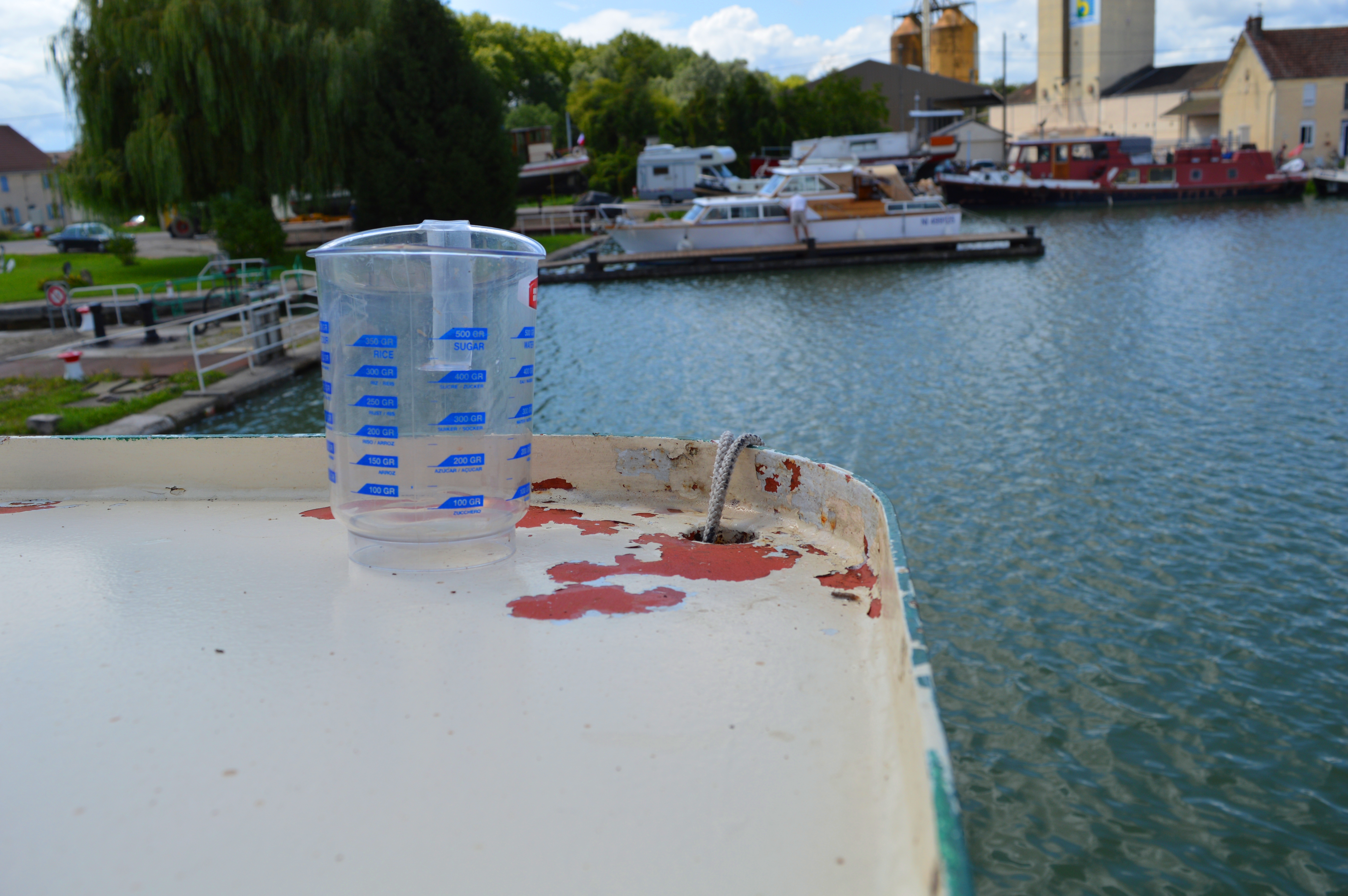
The top of the roof
What followed was a rather awkward tug-of-war on the cord, each end, to clean the pipes, but it worked! Success. Now I have to get sanding and painting!
A self-sufficient life-style is one of the big attractions to living on a boat. On our last boat, a sailboat, we rigged a rather simple and effective dam on the deck, near the water inlet for the tank – it worked a treat.
On our barge, Noel and I have much work to do. But, first we want to install solar panels and rig up a rain catcher. The solar panels have already stirred-up our creative minds in the way of being able to raise and lower the ‘fixed’ panels; more on that another day.
I started the rain catcher project a few days ago. I needed to sand and paint the wheelhouse roof, but it was raining, so I turned my attention to the down-pipes, first.
Gold coloured ‘down-pipe’ to carry the water from the wheelhouse roof down to our water tanks (where lock is)
Here you can see that someone has thoughtfully installed down pipes from the roof. We have odd and ends of plastic doohdads to extend the pipe to reach the tank. However, the down-pipes are in need of a rather good scrub.
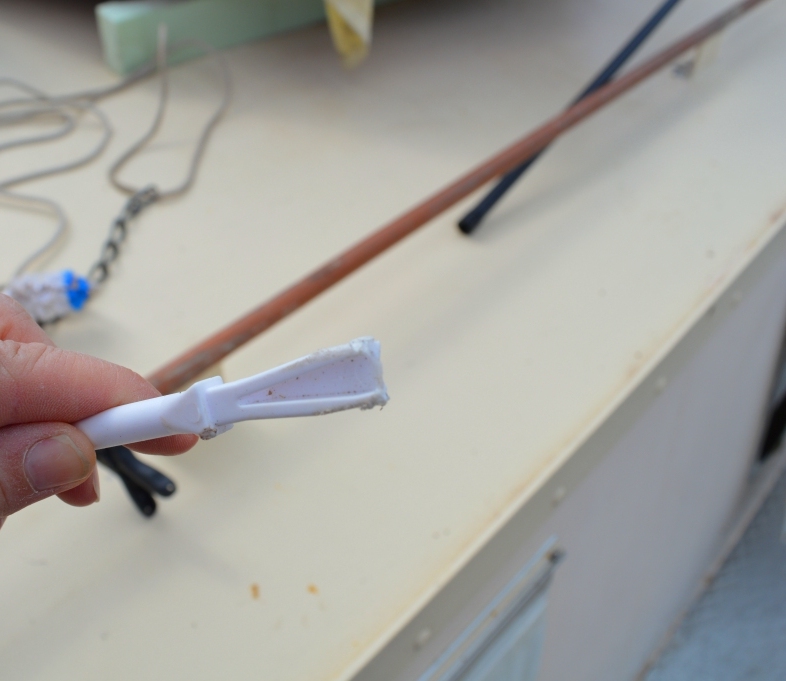
Pipe and brushes
Here are the weapons for the cleaning job. But I had to figure out how to ‘fix’ the brush onto the plastic (chimney-sweep gear?) pipe.
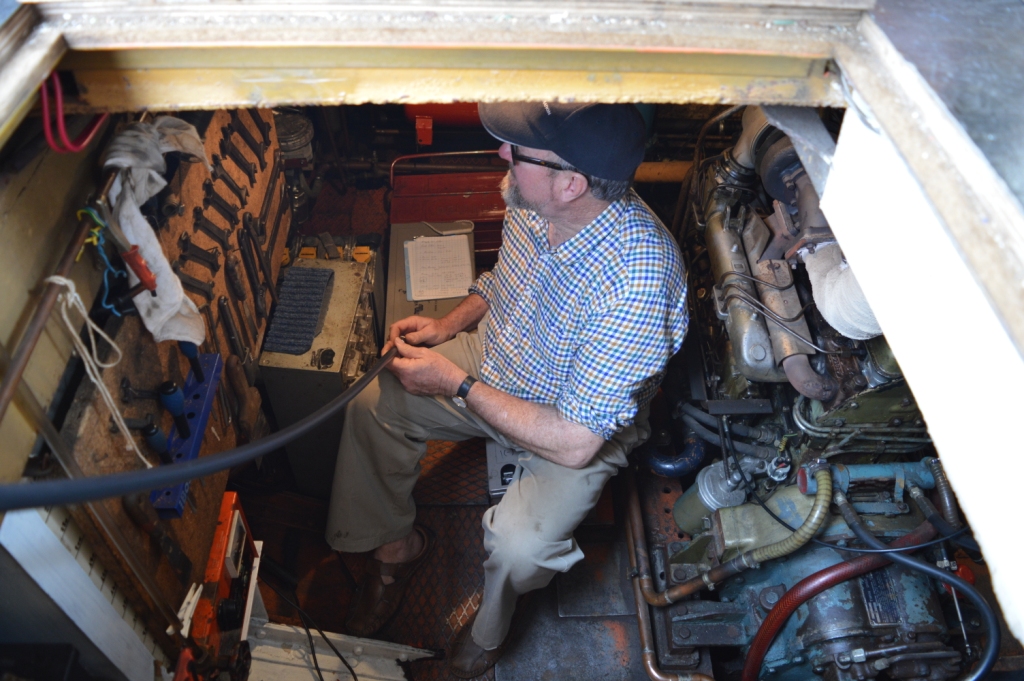
Searching in the engine room for the right sized nut.
We found a nut (well noel did)
This nut fits on the male end of my plastic pipe and therefore if I use the nut as a die, and make a thread on the cleaning brush handle, I could screw them together.
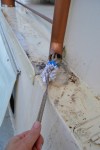
Brush on right with filed down handle and thread.
I had to file down the end of the cleaning brushes first.
Then slowly ease on the nut (backwards and forwards) and make the thread.
Tahh – darrrr!
Finally it all came together, the thread idea worked a treat – so far!
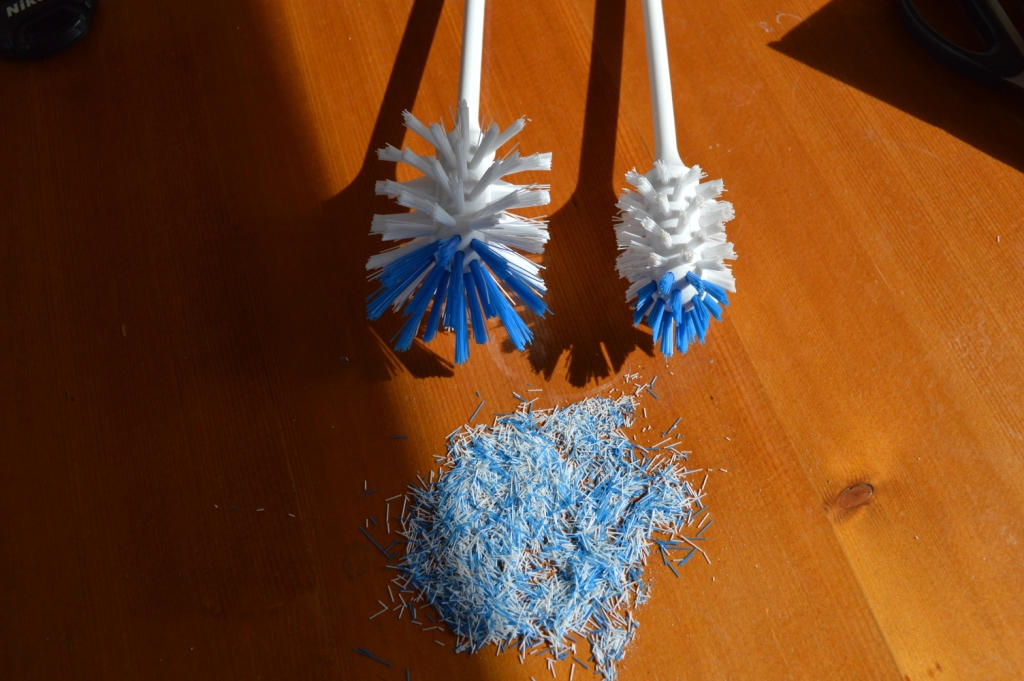
Back up (original sized brush) – and trimmed brush!
Then I had to trim the brush, as it is a bit wide for the pipe
And voila – first stage of the water-catcher complete.
Anyone would think we were planning an ocean voyage. While we had use of a car for an extra day, we stocked up with bulky/heavy shopping for the boat. You know the kind of things, items that won’t go off in the near future.
Yesterday’s shopping
I re-arranged the galley, and started to wonder, ‘just how does everyone else pack their gear?’ I tend to keep sauces together, tins together, dried stuff together and potatoes and onions in a cool dark spot (they can last for weeks and weeks).
More food means more ideas and yummy dinners!
I am quite the ‘stower’ on board. On Mariah (our first boat which was a 33 ft sail boat), we’d fill the floor with bags of food, prior to an ocean crossing. Noel could never understand where I had put it all.
My positive?, the car is expensive but down the line, we will have saved our backs carrying heavy shopping, and I feel a real sense of satisfaction when we are fully ‘stocked up’.
By the by, please remember to always cut the plastic rings (the ones used on cans) – we dispose of our rubbish very carefully. Even if these rings go in a plastic bag then a rubbish bin, we still cut them – just in case . . . . they can be very harmful to wildlife.
What does it cost to run a boat? The answer is irritating. The answer is a question.
How much money do you have?
This article is an attempt to help you think about what it may cost. This exercise will guide you towards your potential expenses. However, you cannot forecast equipment failure, taxes, medical emergencies, breakdowns etc.
First off
It is important to remember that an enormous quantity of money does not guarantee success in this lifestyle. A simple boat equals simple costs. The fewer things you make do without, the less you will spend.
Can you ‘do without’ a marina and carry your own water?
Regular payments vs ad hoc
At first glance the land-living expenses listed below looks much shorter than the cruising list. However, the land list has regular (monthly/weekly) payments, whereas the cruising list has ad hoc costs. You may have marina costs once a year. You may have few breakdowns/repairs or no medical costs.
1) Make a list of your current (land living) expenses:
Mortgage/rent
Utility Bills
Rates
Insurance
Phone/Satellite TV/Internet
Car (all inclusive costs for our small Barina (5 years ago) was AUS$28 a day!). Click here for cost calculator.
Entertainment (eating out/movies)
Food
Checking in costs can be reduced if you DIY the process and not hire an agent
2) Make a list of what you may spend cruising (after boat purchase)
Charts/pilots
Checking in charges*
Cruising Permits/taxes (changes with each year/country)
Marina fees (you may not always be able to anchor out)
Accommodation (can you stay on the boat when hauled out?)
Sight-seeing
Flying home (family emergency)
Gas/LPG/Fuel/Water (in some places you will pay for water)
Storage costs (are you renting your house/selling your house, storing possessions)
Transit charges (Panama canal/Suez canal)
Repairs/maintenance/new equipment (25% of the value of your boat is a good budget)
Medical costs
Exchange rate fees/currency variations
Mail forwarding services
Bribes ($20 here and there)
Food (some places it will be incredibly cheap, other places it will be incredibly expensive!)
*Checking in charges can range from $1,000+ (Galapagos, current charges) to nothing. We estimate our checking-in costs for around the world, including cruising permits, but excluding visas, to be around US$2,500. The most expensive (for us) was Sri Lanka (US$200) and least expensive France ($0). However, this was a few years ago! (Galapagos’ charges were under $200 then.)
Can you make your own repairs, or do you need to hire an expert?
Personal situation
Obviously, you also need to account for your personal situation, for example:
Retired/retirement fund/savings?
Working as you go?
Skills to use while sailing?
Sold up? Still paying mortgage and/or storage?
Just how cheaply can you live?
We have friends who claim they often lived on $1 a day. They caught fish and had a very simple 28 footer. They were expert ‘fisher-people’ and had the know-how (and spare parts) to complete 99% of their necessary repairs. This is quite unusual. You must not rely on catching fish! Also, you would have to be prepared to only use five litres of diesel a year.
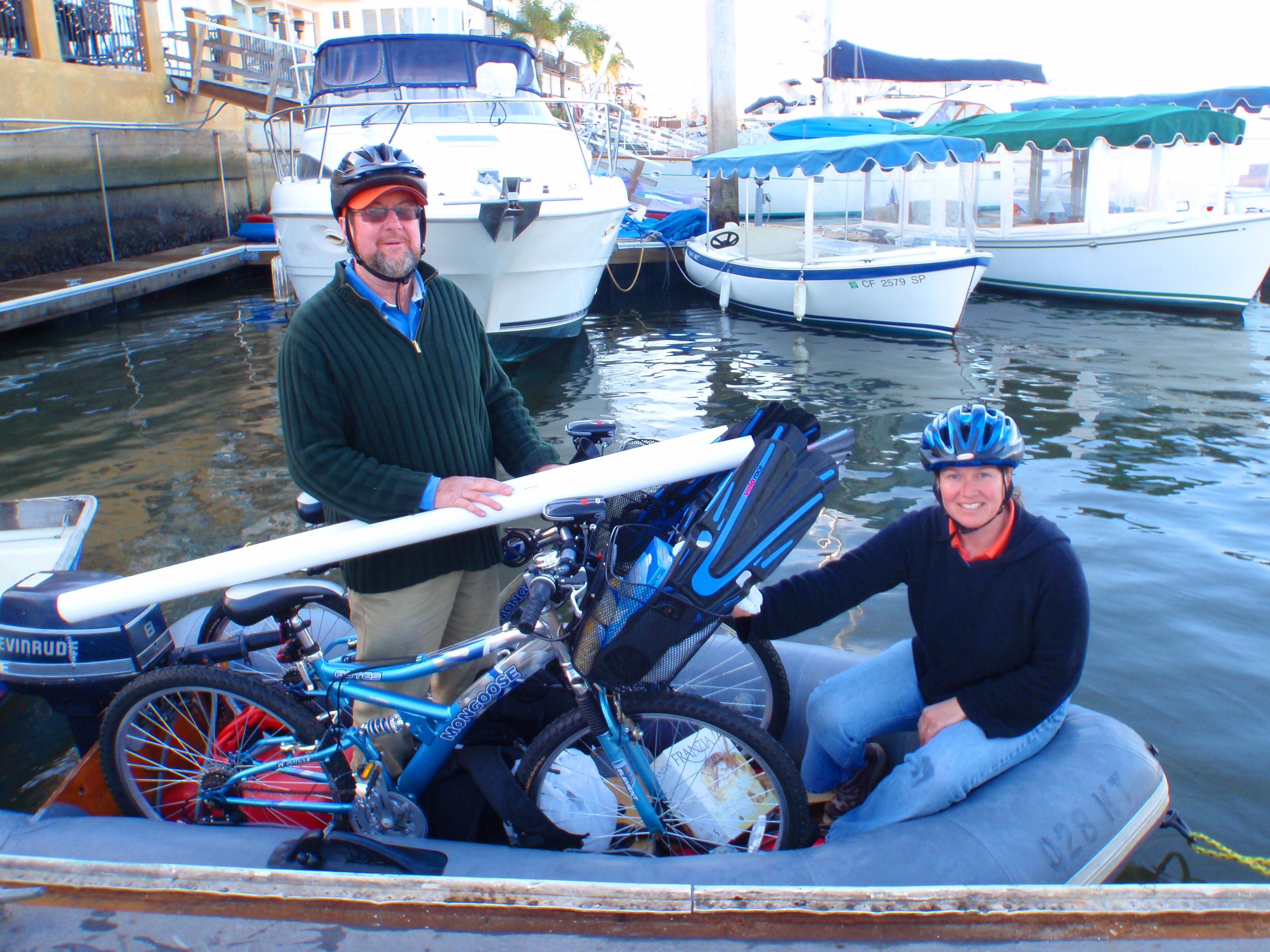
Bicycles and dinghies instead of cars and marinas.
Our expenditure
At the top, under SAILING STUFF/FAQ we have listed our expenditure in Ecuador for over a month (Ecuador Expenditure), including our daily jobs. There is also a description of where we started from, ie what we already had on board.










 Jackie Parry - author